02.03.2026 22:04
As oil shipments through the Strait of Hormuz decreased by 86%, over 700 ships went into waiting; increasing security risks and suspended passages have heightened concerns about serious supply disruptions in global energy markets. This crisis once again highlighted the validity of President Erdoğan's warning on the matter.
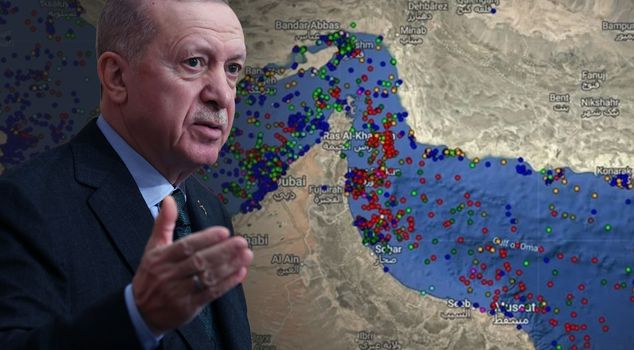
President Recep Tayyip Erdoğan's warning that "The conflict process will have very serious consequences for regional and global security" following the outbreak of war between Iran and the US/Israel coalition revealed the scale of the crisis in global energy markets through images coming from the Strait of Hormuz.
SHIPS WAITING FOR THE WAR TO END
Over 700 ships are waiting for the war to end at this strategic transit point that connects Middle Eastern oil and natural gas production to global markets. The shipment chain of 20 million barrels, which corresponds to approximately 20% of global daily oil consumption, is effectively stranded in the middle of the sea.
86% DROP IN SHIPMENTS
Following the joint US and Israeli attacks on Iran over the weekend, ship operators suspended strait crossings due to rising insurance costs. According to data shared by the analytics firm Kpler, the volume of 21 million barrels transported by 15 tankers on February 27 dropped to 2.8 million barrels with 3 tankers as of March 1.
This table indicates an 86% collapse in shipments compared to the daily average of 19.8 million barrels in 2026. On both sides of the strait, 334 crude oil tankers and hundreds of ships carrying refined products are waiting.
Experts assess that even if loading operations continue, the decrease in eastbound exits and the lengthening of waiting times will increase freight costs and lead to significant delays in arrivals.
SECURITY LEVEL "CRITICAL"
The Iranian Revolutionary Guard Corps sent a message that "no ship will be allowed to pass" to vessels wishing to use the Strait of Hormuz. Some container ships changed their routes to move away from the area. The United Kingdom Maritime Trade Operations (UKMTO) raised the maritime security level to "critical," the highest risk category, following the confirmation of numerous attacks on commercial vessels in the Gulf of Oman and the United Arab Emirates.
ERDOĞAN WARNED THE WHOLE WORLD
In a statement regarding the conflict environment in the region, President Erdoğan said, "If necessary intervention is not made, the conflict process will have very serious consequences for regional and global security. No country can bear the economic and geopolitical uncertainties that such a scenario will create. Therefore, it is essential to extinguish the fire before it grows larger."
HISTORIC INCREASE IN FUEL PRICES
Meanwhile, with the crisis between Israel, the US, and Iran spilling over to the countries in the region, energy prices have skyrocketed. Following Brent oil nearing the $80 mark, a historic increase in diesel and gasoline prices has been confirmed. At midnight between Tuesday and Wednesday, the price of diesel will increase by 5.6 TL per liter. The increase in gasoline will be 2.10 TL.