26.05.2026 06:30
The United States Central Command announced that it conducted "defensive" strikes on missile bases and mine-laying military boats in southern Iran. The targets included vessels belonging to Iran's Revolutionary Guard near the Strait of Hormuz and a missile base in Bandar Abbas. Explosions were heard in various Iranian cities, while US officials argued that the operations did not end the ceasefire. International media reported that tensions in the region are rising again.
The United States Central Command (CENTCOM) announced that it conducted "defensive" strikes on some military targets in southern Iran. The statement said that mine-laying boats and missile bases of the Islamic Revolutionary Guard Corps were targeted.
Tim Hawkins, a CENTCOM spokesperson speaking to Fox News, stated that U.S. forces took action against threats originating from Iran, saying, "We conducted self-defense strikes against targets in southern Iran to protect our forces." Hawkins explained that the strikes specifically targeted missile bases and military boats attempting to lay mines in the Strait of Hormuz.
THE STRAIT OF HORMUZ AND BANDAR ABBAS WERE TARGETED
According to information in the U.S. press, the operations centered around Iran's strategic port city of Bandar Abbas and the Strait of Hormuz. The Wall Street Journal reported that two boats belonging to Iran's Islamic Revolutionary Guard Corps were struck during a mine-laying operation, and that Iran fired surface-to-air missiles at U.S. warplanes, after which the missile base was targeted.
Senior U.S. officials, speaking on condition of anonymity, emphasized that the operations were "limited and defensive." While the U.S. side argued that the events do not mean the ceasefire has completely ended, it was stated that the strikes have been halted for now.
EXPLOSION SOUNDS IN IRAN CAUSED PANIC
Earlier in the day, Iranian media reported that loud explosion sounds were heard in the cities of Bandar Abbas, Jask, and Sirik. While no official statement was initially made, it was assessed that the explosions might be linked to U.S. operations. It was claimed that air defense systems were activated, particularly around Bandar Abbas.
Some Iranian sources alleged that the U.S. targeted not only military points but also some civilian areas in coastal regions. Media outlets close to Iran accused the Washington administration of violating the ceasefire.
FOREIGN PRESS: CEASEFIRE HANGS BY A THREAD
Britain's Guardian newspaper reported that diplomatic contacts between the U.S. and Iran, mediated by Qatar and Pakistan, continue, but the latest strikes seriously risk the process. The news stated that the parties are discussing the reopening of the Strait of Hormuz to safe passage and the loosening of some sanctions against Iran.
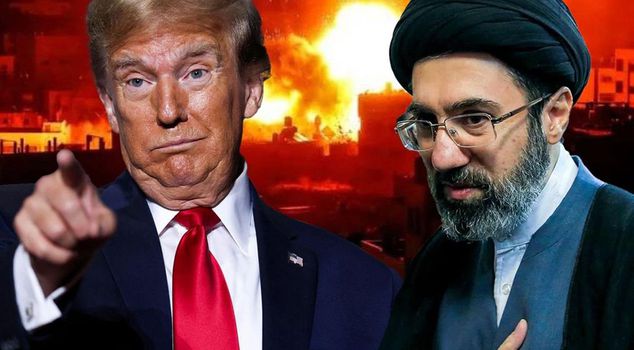
It was noted that U.S. President Donald Trump used dismissive language regarding the strikes. According to the American press, Trump described Iran's moves as "minor harassment" while signaling that harsher operations could be conducted if the Tehran administration does not accept the terms of the agreement.
THE STRAIT OF HORMUZ IS CRITICAL FOR THE GLOBAL ECONOMY
The Strait of Hormuz, through which a significant portion of global oil transportation passes, has become the focal point of U.S.-Iran tensions in recent months. Concerns are growing in international energy markets due to the U.S. expanding its naval blockade against Iran and Iran increasing its military activities in the region in response. Experts warn that even the smallest military contact between the parties could reignite a regional war.