08.04.2026 20:10
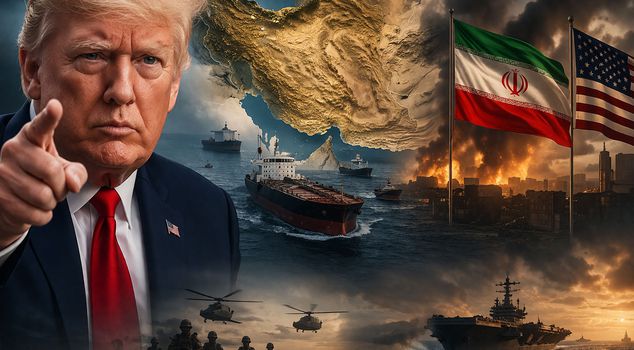
U.S. President Donald Trump emphasized that they would only accept a single results-oriented negotiation framework while announcing that the critical process with Iran was progressing behind the scenes. Signaling a joint model with Tehran for the security of the Strait of Hormuz, Trump drew a clear line on uranium enrichment. Trump also clearly stated that Lebanon was not included in the ceasefire boundaries due to the presence of Hezbollah.
U.S. President Donald Trump announced that relevant negotiations would continue behind closed doors following a two-week ceasefire reached with Iran.
While emphasizing that Washington would only accept a "single negotiation framework focused on producing results," Trump refrained from sharing details about the process.
“JOINT MODEL” MESSAGE FOR THE STRAIT OF HORMUZ
In an interview with a television channel, Trump also addressed the discussions regarding the Strait of Hormuz, stating that a joint mechanism based on security could be established with Iran.
In response to a question about the possibility of charging ships passing through the strait, Trump said this could be considered within the scope of a "joint initiative model." He argued that the proposed plan would both enhance security and reduce risks in the region.
“NO PERMISSION FOR URANIUM ENRICHMENT”
Clarifying his stance on Iran's nuclear activities, Trump stated that the Tehran administration would absolutely not be allowed to enrich uranium. He emphasized that this issue is a "red line" for the U.S.
“U.S. TROOPS WILL NOT WITHDRAW FROM THE REGION”
Trump stated that U.S. troops would not withdraw from the region, noting that peace talks were expected to begin on April 10 and that China also played a role during the temporary ceasefire process.
LEBANON AND HEZBOLLAH EXCLUDED
The most notable exception in the agreement was Lebanon. Trump clearly stated that Lebanon was not included in the ceasefire boundaries due to the presence of Hezbollah. Describing this situation as a "separate conflict," Trump expressed that Israel's operations against Hezbollah targets did not violate the agreement.
TEMPORARY CEASEFIRE BETWEEN THE U.S. AND IRAN INCLUDING ISRAEL
Following the attacks initiated by the U.S. and Israel against Iran on February 28, which turned into a war with Iran's retaliatory actions against some regional countries, U.S. President Donald Trump announced on April 8 around 01:30 that he accepted the ceasefire.
Trump stated that they accepted a two-week ceasefire on the condition of opening the Strait of Hormuz, that they received a 10-point proposal from Iran, and that this constituted a viable basis for negotiations.
The Iranian National Security High Council, which stated that "Iran has achieved its objectives in the war," also reported that the final negotiations were aimed to be concluded in Islamabad within a maximum of 15 days.
Turkey, Pakistan, and Egypt made intense efforts for the continuation and resolution of the message exchange between the U.S. and Iran.
The Israeli administration, which announced its support for the temporary ceasefire, continues its attacks on Lebanon, arguing that the issue of Lebanon is not included in the agreement.