01.03.2026 14:00
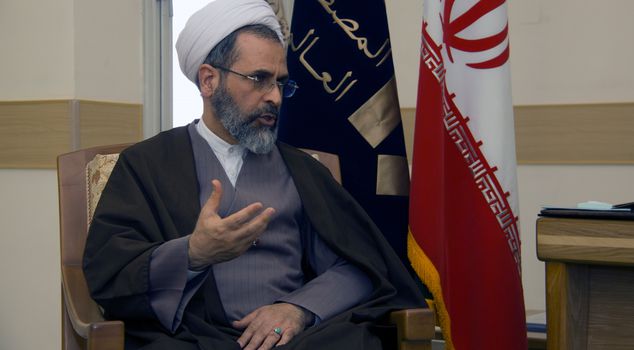
As a result of the operation carried out by the United States and Israel, Ali Raza Arafi has been appointed as the temporary religious leader in Iran following the death of Ayatollah Ali Khamenei. Arafi, who has a background in education and religious bureaucracy, does not have a security or military background. Arafi is a member of the Guardian Council and is one of the key actors in the institutional structure of Iran.
After the death of Ayatollah Ali Khamenei, who lost his life in the operation of the USA and Israel, Ali Riza Arafi was appointed as the temporary religious leader in Iran. Arafi, who has a background in education and religious bureaucracy, has served in the most critical institutions of the state.
CRITICAL TURNING POINT IN IRANIAN HISTORY
Following the operation carried out by the USA and Israel against Iran, Ayatollah Ali Khamenei, who had been governing the country since 1989, passed away. The Tehran administration declared a 40-day national mourning. After the news of his death, a decision for a 7-day public holiday was made, and people gathered in the squares.
The international community focused on who would succeed Khamenei. As a result of parliamentary evaluations and decisions made, Ayatollah Ali Riza Arafi, a member of the Guardian Council, began his duty as the temporary religious leader.
WHO IS ALI RIZA ARAFI?
Ayatollah Ali Riza Arafi was born in 1959 in the city of Meybod, Iran. He completed his religious education in the seminaries of Qom and began his scholarly career at a young age.
Arafi serves in the Guardian Council, which oversees the compliance of laws with Islam. He has played significant roles in the management of the seminary system in Iran and has been at the forefront of the religious education structure for many years. He has no security or military background.
ACTIVE IN THE MOST CRITICAL INSTITUTIONS OF THE STATE
At 67 years old, Arafi has taken active roles in institutions that are at the center of Iran's religious and political system. He currently serves as the head of the religious science centers in Iran. He is among the prominent figures delivering Friday sermons in the city of Qom.
Arafi also serves as a member of the Guardian Council and as the deputy chairman of the Assembly of Experts. These roles make him one of the key actors in the institutional structure of Iran.
A NAME CLOSE TO KHAMENEI
Analysts find Arafi's rapid rise in the state mechanism in recent years noteworthy. Alex Vatanka, an Iran expert from the Washington-based Middle East Institute, states that Khamenei has appointed Arafi to critical positions for a long time.
According to Vatanka, this situation shows that Khamenei trusts Arafi's bureaucratic capacity and institutional management skills.
LIMITED POLITICAL BASE, HIGH INSTITUTIONAL INFLUENCE
Some assessments emphasize that Arafi is not a strong leader of a political faction. Experts state that Arafi is not known as a figure who has established a strong political connection with security institutions, but rather is effective within the religious education system and bureaucracy.
For this reason, it is commented that Arafi was preferred as a name that could maintain institutional balance during the transition process.
GROWN WITH RELIGIOUS TRADITIONS
Arafi, who was born into a religious family in the city of Meybod in Yazd province, has a father, Ayatollah Muhammad Ibrahim Arafi, who is also among the recognized religious figures in Iran.
Entering religious educational institutions in Qom at a young age, Arafi studied under important religious authorities and taught for many years in both religious institutions and universities. Rising to the management of the religious science centers in Qom, Arafi stands out as the head of the religious education system in Iran.