04.03.2026 01:43
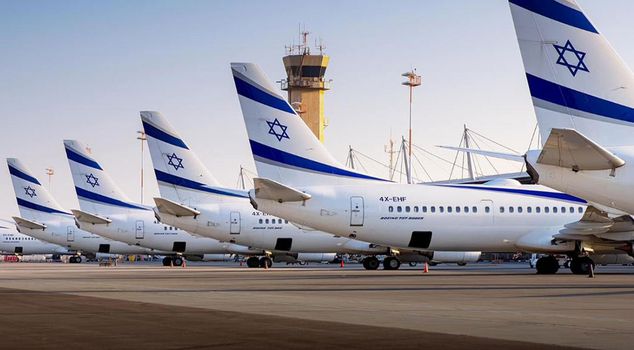
Israel has decided to gradually reopen its airspace, which it had closed following the attacks it launched on Iran. Transportation Minister Miri Regev stated that with the resumption of air traffic, actions will be taken for the return of Israeli citizens stranded abroad, announcing that it is planned to bring back approximately 10,000 people per day.
Israel has decided to gradually reopen its airspace, which it had closed following the attacks it launched on Iran.
PLAN TO BRING BACK APPROXIMATELY 10 THOUSAND ISRAELIS PER DAY
Israeli Transportation Minister Miri Regev stated at a press conference that she approved the decision to open the airspace between Wednesday night and Thursday to bring back tens of thousands of Israelis stranded abroad following the attacks launched in conjunction with the United States against Iran.
Regev mentioned that they plan to bring back approximately 10 thousand Israelis to the country daily after the airspace is opened, and noted that they will take a series of measures to prevent congestion at Ben Gurion Airport in the capital, Tel Aviv. Among the measures, it was stated that no passengers would be taken on flights departing from Ben Gurion Airport.
TWO FLIGHTS PER HOUR WILL BE ALLOWED TO LAND
As part of the plan, only one aircraft with a capacity of 200 passengers will be allowed to land at Ben Gurion Airport, which will operate for 24 hours on the first day. In the following days, it was reported that two aircraft or one wide-body aircraft would be allowed to land per hour. Sharon Kedmi, the director of the Israeli Airports Authority, stated that the operation to bring back Israelis stranded abroad could take one week to 10 days.
Israel had closed Ben Gurion International Airport near Tel Aviv following the attacks it launched on Iran in conjunction with the United States.
US-ISRAEL ATTACKS ON IRAN
Israel and the US launched a military attack on Iran on February 28 while negotiations were ongoing between the Tehran and Washington administrations. Iran responded with attacks on targets it identified in several regional countries, including Qatar, the United Arab Emirates (UAE), and Bahrain, where US bases are located, in addition to Israel. In the US-Israel attacks, Iranian leader Ayatollah Ali Khamenei and many high-ranking officials were killed. The Iranian Red Crescent announced that 787 people lost their lives in the US-Israel attacks.