10.03.2026 20:11
A new statement has come from the Islamic Revolutionary Guard Corps regarding the Strait of Hormuz. The commander of the IRGC Navy, Alireza Tengsiri, stated, "No ship associated with those attacking Iran has the right to pass through the Strait of Hormuz. If you have doubts, come closer and try."
The commander of the Iranian Revolutionary Guard Corps Navy, Alireza Tengsiri, said, "No ship connected to those attacking Iran has the right to pass through the Strait of Hormuz. If you have doubts, come closer and try."
"IF YOU HAVE DOUBTS, APPROACH THE STRAIT OF HORMUZ AND TRY TO PASS"
Tahran's closure of the Strait of Hormuz in the war between the US, Israel, and Iran has deeply affected international markets. A new statement came from the Iranian Revolutionary Guard Corps, which does not back down. The commander of the Revolutionary Guard Navy, Alireza Tengsiri, stated, "No ship connected to those attacking Iran has the right to pass through the Strait of Hormuz. If you have doubts, come closer and try."
TRUMP'S ATTENTION-GRABBING MESSAGE
Trump stated that if Iran makes any attempt to block the flow of oil in the Strait of Hormuz, which is critical for global oil trade, the US will respond with much harsher military action.
In his statement, the US President said, "If Iran does anything to stop the flow of oil in the Strait of Hormuz, it will be hit 20 times harder than it has seen so far from the US."
"EASILY DESTROYABLE TARGETS WILL BE STRUCK"
Trump noted that if Iran takes such a step, the US will strike easily destroyable targets, arguing that this would make it nearly impossible for Iran to rebuild as a country.
Trump stated that keeping the Strait of Hormuz open is a "gift from the US" for countries that heavily use the strait, especially China.
IRAN RESPONDS HARSHLY
Iran quickly responded harshly to Trump's words. The commander of the Iranian Revolutionary Guard Corps Air Force, Hossein Majid Mousavi, indicated that the war could enter a new phase, stating that missile attacks would become more destructive.
Mousavi stated that Iran would use heavier warheads in the future. The Iranian commander signaled that no missile with a warhead lighter than 1 ton would be launched from now on, indicating that the intensity of attacks could increase in the new era.
TENSION ESCALATES IN WAR
This statement was interpreted as Iran being able to reflect its long-range and high-destructive power missile capacity more strongly on the field. Iran's ballistic missile program has long been cited by the US and Israel as one of the biggest security threats in the region.
Meanwhile, on the 11th day of the war, mutual military movements between the parties continue. It has been reported that the US Navy is increasing its presence in the Gulf region and is operating in coordination with allied countries in the area, while Iran has put its military elements around the Strait of Hormuz on high alert.
SET SIGHTS ON THE STRAIT OF HORMUZ
On March 9, Trump told CBS News, "Some ships are currently passing (through the Strait of Hormuz), but I am considering taking control of the strait." In response to Trump, the Iranian Revolutionary Guard Corps announced that any Arab or European country that expels Israeli and US ambassadors could pass through the Strait of Hormuz from today.
THE STRAIT OF HORMUZ AT THE CENTER OF TENSION
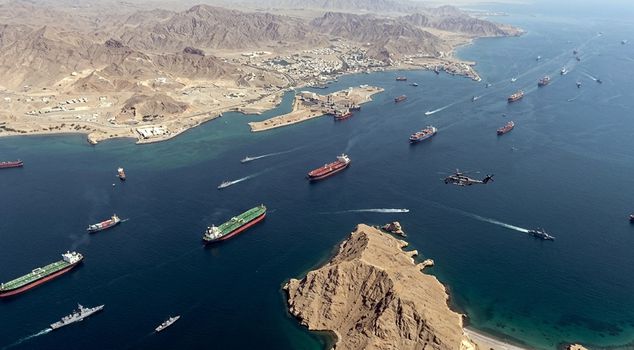
The Strait of Hormuz, located between the Persian Gulf and the Gulf of Oman, is known as a strategic transit point for global energy markets. It is reported that approximately one-fifth of the world's oil supply is transported through this narrow waterway.
Recently, due to increasing military activity in the region and the effects of the war, serious disruptions in tanker traffic in the Strait of Hormuz have been reported. Some oil tankers are said to be waiting in the region due to security concerns, and maritime traffic has occasionally come to a standstill.
OIL MARKETS SENSITIVE
Energy markets are closely monitoring developments in the Strait of Hormuz. Experts suggest that if the strait is closed or oil shipments are disrupted, there could be sharp increases in global oil prices.
Trump's statements are also being closely watched in energy markets, and it is believed that the US administration wants to convey the message that it will not allow the flow of oil in the strait to be interrupted.