16.03.2026 13:31
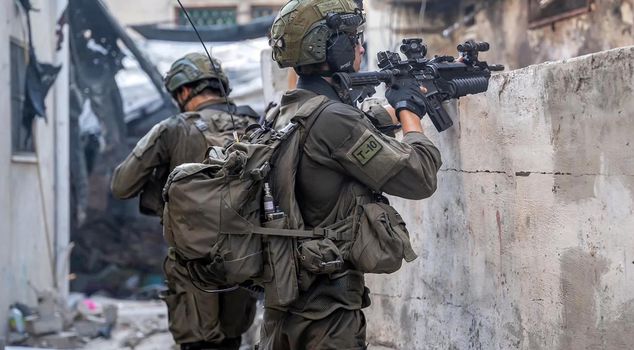
As the war between the US-Israel and Iran continues with full force on its 17th day, the Israeli army announced that it has launched a ground operation to expand the "buffer zone" in southern Lebanon in the morning hours. It was reported that the 146th Reserve Division is deployed in southwestern Lebanon, while the 36th Division is conducting raids in the Rab el-Talatin area.
The Israeli army announced that it has launched ground attacks targeting key points in southern Lebanon to expand its occupation, which has been under intense assault for the past few days.
EXPANDING THE BUFFER ZONE
In a written statement from the Israeli army, it was claimed that the ground attack was initiated to expand the "buffer zone" in southern Lebanon against Hezbollah.
TROOP REINFORCEMENTS HAVE BEEN MADE TO THE REGION
It was noted that troop reinforcements had previously been made to the region for a "targeted ground operation" announced to have started in southern Lebanon.
THE 91ST DIVISION HAS CONDUCTED ATTACKS
It was reported that the 91st Division, affiliated with the Israeli army, began conducting attacks in southeastern Lebanon late Saturday night. It was stated that prior to the ground forces, the Israeli army carried out intense airstrikes and artillery fire in the region.
THEY ARE CONDUCTING RAIDS
On the other hand, it was recorded that the 146th Reserve Division is deployed in southwestern Lebanon, while the 36th Division is conducting raids in the Rab el-Talatin area.
WHY DID ISRAEL INITIATE A GROUND OPERATION?
The main reason for Israel's initiation of a ground operation in Lebanon is cited as the increasing military tensions and border security concerns with Hezbollah, which operates in southern Lebanon. Following the war that began in Gaza, Hezbollah's attacks on northern Israel using rockets, missiles, and drones quickly escalated the conflicts between the two sides. The Israeli administration announced that many settlements along the northern border were evacuated due to these attacks and that thousands of civilians were evacuated from the region. The Tel Aviv administration stated that it launched a ground operation to eliminate the security risks along the border and to push Hezbollah forces away from the Israeli border.
The Israeli army states that the objective of the operation is to weaken Hezbollah's military infrastructure in southern Lebanon, destroy rocket and missile depots, and end the organization's presence along the border. Israel also argues that Hezbollah's tunnel networks and attack preparations pose a serious threat to northern Israel. Therefore, it is expressed that the operation also aims to establish a security line along the Israeli border.
On the other hand, Hezbollah claims that it is responding to Israel's military operations in Gaza and defending Lebanese territory. Hezbollah, known for its closeness to Iran, being one of the strongest armed groups in the region, causes the conflict to be seen not only as a matter between Israel and Lebanon but also as part of a broader regional tension. According to experts, Israel's ground operation in Lebanon also carries the risk of expanding the conflict in the Middle East following the Gaza war.
ISRAEL'S ATTACKS ON LEBANON
In a statement made by the Israeli army on March 2, it was mentioned that sirens were activated in the northern part of the country after detecting missile launches from Lebanon. Later, the Israeli army announced that it had initiated airstrikes across Lebanon, targeting the capital Beirut, and decided to expand its ground occupation in Lebanon with intense attacks from the air and sea.
The Lebanese Ministry of Health announced on March 15 that 850 people have lost their lives and 2,105 have been injured in the attacks carried out by Israel on Lebanon since March 2. The Disaster Management affiliated with the Lebanese government reported that the number of people forcibly displaced due to Israel's occupation and attacks has exceeded 830,000.