13.03.2026 11:22
Transport and Infrastructure Minister Abdulkadir Uraloğlu said, "We had 15 ships in the Strait of Hormuz, and we passed one of them after obtaining permission from the Iranian authorities for using the Iranian port. We are trying to stay in contact with the Iranian side. 14 of our ships are waiting, and they currently have no problems."
The Minister of Transport and Infrastructure, Abdulkadir Uraloğlu, met with members of the press during an iftar program and provided evaluations on current issues.
Uraloğlu stated that they initially reduced flights to Iran due to the attacks by the US and Israel on Iran and Iran's response, and mentioned that currently flights to Iran, Iraq, Jordan, Lebanon, and Syria have been suspended.
"AZERBAIJAN'S 2 AIRPLANES LANDED IN IGDIR"
Uraloğlu expressed that flights to Qatar, the United Arab Emirates, Kuwait, and Bahrain have been canceled daily, saying, "The airports we used most comfortably were Riyadh, Jeddah, Medina, and Muscat; we were able to use those more actively. During this process, as a result of the drone attack on the airport in Nakhchivan, two Azerbaijani planes landed in Igdir. From there, we managed to send them safely to Nakhchivan."
Minister Uraloğlu stated that they have added extra flights, especially from Oman, to enable both Turkish citizens and citizens of other countries to return to their countries, saying, "We added extra flights by discussing with my counterpart, the Minister, and that continues." Uraloğlu expressed that some flights have been redirected to other countries regarding direct transit passages, and stated that they did not allow a result that would affect the normal situation in coordination with the Ministry of Foreign Affairs.
"WE HAVE 2 AIRPLANES LEFT IN IRAN"
Uraloğlu indicated that Turkey has 2 airplanes left in Iran, stating, "One is Turkish Airlines, and the other is Pegasus. In fact, we had about 10 airplanes left during the 12-Day War. Now, as this tension has increased, we have tried to manage the process there as well. One airplane is also left in Iraq. The personnel have been brought back safely, and there is no problem. We will retrieve the airplanes from there at the first opportunity." Minister Uraloğlu mentioned that airline companies have different forecasts regarding flight cancellations, stating that they organized these processes with the General Directorate of Civil Aviation and the Ministry of Foreign Affairs, redirected road traffic to Georgia, Azerbaijan, and Kazakhstan instead of Iran, and coordinated this with the relevant countries.
"THE FIRST TURKISH-OWNED SHIP PASSED THROUGH THE STRAIT OF HORMUZ"
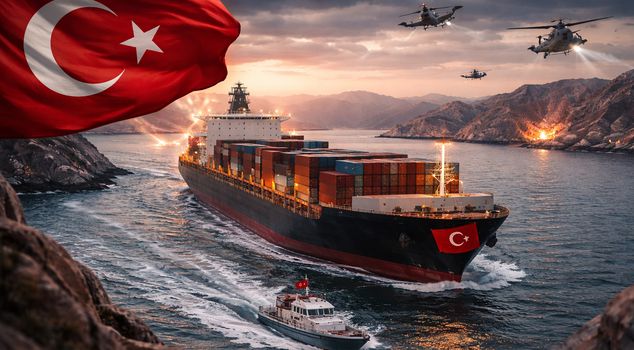
Uraloğlu pointed out that the Strait of Hormuz is experiencing a troubled process, stating: "We declared the highest level of security there. I can say that there are no Turkish-flagged ships. We are in constant contact with our Main Search and Rescue Center regarding Turkish-owned ships. You know the importance of the Strait of Hormuz in global trade, energy, and supply. If we look at the number of ships, there are still 14 Turkish-owned ships there, but when we total it, there are currently 800 ships of various classes in the Strait of Hormuz. There are also 6 cruise ships waiting there with their passengers. We had 15 ships in the Strait of Hormuz, and we managed to pass one of them after obtaining permission from Iranian authorities because it was using an Iranian port. We are trying to stay in contact with the Iranian side. 14 of our ships are waiting, and they currently have no problems."
WHAT IS HAPPENING IN THE STRAIT OF HORMUZ?
During the war process in which tensions between Iran and the US/Israel escalated, several critical developments occurred around the Strait of Hormuz. The strait has not been completely closed, but military activity and threats in the region have increased.
THREAT FROM IRAN TO THE STRAIT OF HORMUZ
Iranian military officials made statements indicating that the Strait of Hormuz could be closed following the US and Israeli attacks. Iran implied that it could target energy shipments if attacks against it continue.
US NAVY INCREASED POWER IN THE REGION
In response to the escalating tensions, the US sent additional warships and fighter jets to the Gulf and the Strait of Hormuz. The aim was stated to ensure the safe passage of oil tankers and to prevent a possible Iranian intervention.
TANKERS AND COMMERCIAL SHIPS ON ALERT
In the early days of the war, many oil companies and tanker operators slowed down or changed their routes for passages through the strait. Some commercial ships preferred to wait in the region for security reasons.
MISSILE AND DRONE TENSION
Military sources in the region reported that Iran has raised its missile and drone systems to a high alert level in coastal areas. This situation poses a risk to tanker traffic and international trade.
THE STRAIT HAS NOT BEEN COMPLETELY CLOSED
Despite all the tensions, the Strait of Hormuz has not been completely closed, and tanker traffic has continued. However, energy markets closely monitored developments, and fluctuations in oil prices occurred.