04.03.2026 20:00
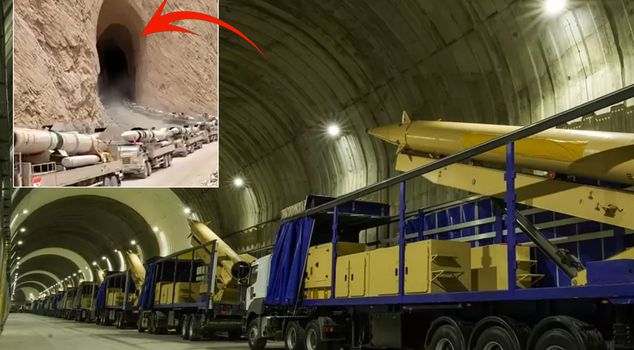
It has been revealed how Iran has protected its ballistic missiles despite the attacks from the United States. According to an analysis on the subject, Iran safeguards its ballistic missile infrastructure with "missile cities" beneath the mountains, reinforced tunnels, camouflage, decoy targets, and mobile launch systems.
The increasing military tensions in the world have brought the question of how countries protect their critical defense systems back to the forefront. The escalating conflicts between Iran, Israel, and the USA have shown that not only the use of ballistic missile systems but also their protection determines the outcome of war.
Interesting Engineering, which publishes in the field of engineering and defense technologies, detailed the methods Iran employs to maintain its ballistic missile capabilities. The report emphasized that protecting missile infrastructure in modern warfare is as important as operational capability.
"MISSILE CITIES" UNDER THE MOUNTAINS
According to the report, Iran builds most of its ballistic missile facilities deep within the mountains, beneath hundreds of meters of rock layers. These complexes, referred to as "missile cities," contain interconnected tunnels, storage areas, and separate sections for warheads and fuel systems. It is stated that these structures complicate reconnaissance activities and increase resilience against air attacks.
STRENGTHENED TUNNELS AND ENTRANCES
The entrances of underground bases are typically designed to be carved into rocky terrains. These entrances are reinforced with thick concrete and steel coverings, transforming them into shelter entrances. Tunnel designs are planned to direct blast waves away from the main complex. Heavy blast-resistant doors and partitioned rooms aim to reduce pressure within the facility, limiting damage.
CAMOUFLAGE AND DECOY TARGETS
Iran also resorts to camouflage and deception methods to protect its ballistic missile systems. It is reported that fake launch pads, inflatable models, and wooden replicas are used to mislead satellites and reconnaissance aircraft. Some missile storage buildings are designed to resemble civilian structures, while others are covered with special nets that reduce heat and radar signatures.
MOBILE LAUNCH SYSTEMS
Iran is also making its systems harder targets by using mobile missile launch vehicles instead of fixed launch pads. These vehicles, known as Transporter-Erector-Launcher (TEL), can quickly deploy from shelters onto highways, desert roads, or valleys. This mobility makes it difficult to destroy all missile systems simultaneously.
REINFORCEMENT WITH CONCRETE AND EARTH
Thick protective layers made of concrete and earth are also constructed over important facilities. These structures are designed to appear like natural terrain in satellite images, aiming to conceal them from optical and radar-based surveillance.
The report also mentioned that Iran has rebuilt tunnel entrances damaged after past attacks, reinforced protective walls, and quickly resumed operations.