11.04.2026 17:51
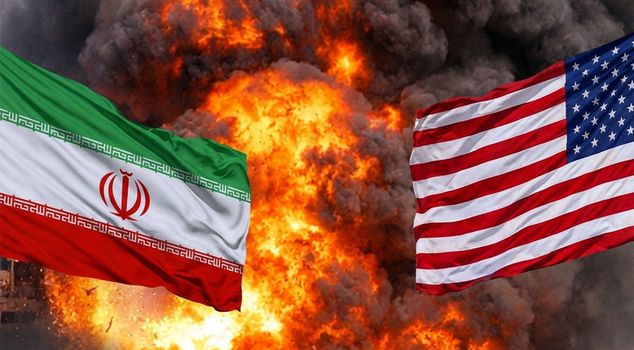
After a two-week temporary ceasefire was announced, the US and Iran sat down in Islamabad, the capital of Pakistan. While it remains to be seen whether a permanent ceasefire decision will emerge from the negotiations held under Pakistan's mediation, the talks have been paused. It was noted that the negotiations could be extended by one day.
A tripartite meeting between the US, Iran, and Pakistan was paused in Islamabad.
IRAN AND THE US SAT DOWN IN PAKISTAN
The US and Iranian delegations came together under Pakistani mediation in the capital of Pakistan, Islamabad, to seek a permanent ceasefire. In the talks that began after a two-week temporary ceasefire, critical issues such as the reopening of the Strait of Hormuz and the easing of economic sanctions are being discussed.
NEGOTIATIONS HAVE BEEN PAUSED
While uncertainty continues regarding the progress of the talks, an unexpected pause has been called in the negotiations. It was noted that the process could be extended by another day due to the parties' negotiations over the details. Diplomatic sources stated that this additional time keeps the possibility of reaching a permanent peace agreement alive, while the tense wait in the region continues.
IRAN: WE SUBMITTED A 10-POINT PROPOSAL
Iranian Foreign Ministry Spokesman Ismail Bakayi stated regarding the contacts with Pakistani officials, "Speaker of the Parliament Mohammad Baqir Qalibaf and Foreign Minister Abbas Araghchi had discussions with Pakistani officials lasting about 2-2.5 hours, and the talks are still ongoing. Iran's assessments, views, and demands were conveyed to the Pakistani side within the framework of a 10-point proposal package," he said.
VANCE LEADS THE US DELEGATION
In today's talks, the US side is represented by a delegation led by Vice President JD Vance. The delegation includes White House Special Representative Steve Witkoff and Trump's son-in-law Jared Kushner. The Iranian side is led by Speaker of the Parliament Mohammad Baqir Qalibaf. Foreign Minister Abbas Araghchi, Secretary General of the Defense Council Ali Akbar Ahmadian, the President of the Central Bank of Iran, and some members of parliament are also participating in the talks.
##19739528##
DELEGATIONS MET WITH SHAHBAZ SHARIF
Both delegations separately met with Pakistani Prime Minister Shahbaz Sharif before the official meeting. Sharif first met with the Iranian negotiation delegation. Immediately after, Vice President JD Vance, leading the US delegation, met with Shahbaz Sharif.
##19739645##
IRAN'S RED LINES
According to Iranian state television, the Tehran administration's "red lines" were conveyed to the Prime Minister of Pakistan. Accordingly, among Iran's priorities are control over the Strait of Hormuz, payment of war reparations, the release of frozen Iranian assets, and a comprehensive ceasefire across the region.
TEMPORARY CEASEFIRE BETWEEN THE US AND IRAN INCLUDING ISRAEL
Following the attacks initiated by the US and Israel on Iran on February 28, and Iran's retaliations with attacks on some regional countries that escalated into war, US President Donald Trump announced on April 8 at around 01:30 that he accepted the ceasefire.
Trump stated that they accepted a two-week ceasefire on the condition of reopening the Strait of Hormuz, that they received a 10-point proposal from Iran, and that this serves as a viable basis for negotiations.
The Iranian National Security High Council, which stated that "Iran has achieved its objectives in the war," also reported that the final negotiations are aimed to be concluded in Islamabad within a maximum of 15 days.
Turkey, Pakistan, and Egypt have made intense efforts for the continuation and resolution of the message exchange between the US and Iran.
The Israeli administration, which announced its support for the temporary ceasefire, continues its attacks on Lebanon, arguing that the agreement does not include the issue of Lebanon.