10.12.2025 10:35
After the earthquakes centered in Kahramanmaraş on February 6, Turkey continues to shake like a cradle, and the recent 4.9 magnitude tremor recorded in the Serik district of Antalya has drawn attention to this region. Prof. Dr. Şener Üşümezsoy, noting that the tremor in the Gulf of Antalya is not just a simple surface fracture, emphasized critical analysis by pointing out the reverse fault movements.
After the earthquakes centered in Kahramanmaraş on February 6, Turkey continues to shake like a cradle.
The latest earthquake, which occurred in the Serik district of Antalya and was recorded as 4.9 in magnitude according to AFAD data, has caused all attention to focus on this region.
FRIGHTENING ANALYSIS FROM ÜŞÜMEZSOY
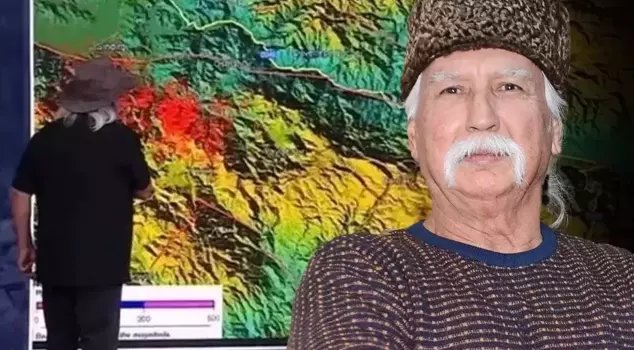
A striking warning came from Prof. Dr. Şener Üşümezsoy, who made evaluations regarding the earthquake that caused great panic in the city. Üşümezsoy stated that there was no simple fracture observed in the analyses of the earthquake, and that the movement was related to the deep structures beneath the Antalya Gulf. According to Üşümezsoy's analysis, the tremor occurred at the collision line of two large plates.
HE POINTED OUT THE REVERSE FAULT STRUCTURES IN THE REGION
Prof. Dr. Üşümezsoy indicated that the earthquake pointed to a deep structure with a northwest-southeast orientation reaching 100 kilometers. He mentioned that the tremor occurred in the subduction zone where the Mediterranean plate dives beneath the Anatolian plate. In his assessment based on tectonic maps, Üşümezsoy also drew attention to the reverse fault structures in the region, emphasizing that the movement around Antalya is directly connected to a broader tectonic system of the Mediterranean.
"THE SEISMICITY IN THE REGION IS NOT DUE TO A SINGLE FAULT"
Recalling that the line extending from the south of Cyprus to the west broke last month, Üşümezsoy stated that this line formed a tectonic zone related to Crete and Rhodes. He expressed that the seismicity in the region is not due to a single fault, but rather arises from complex processes that interact with each other. Üşümezsoy said, "The movement in the Antalya Gulf and its surroundings emerges as a result of this complex reckoning between the Mediterranean and Anatolian plates deep underground."