10.03.2026 11:41
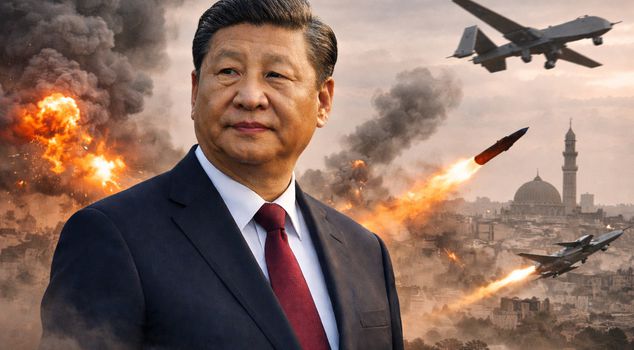
Amid the escalating war between the US-Israel and Iran, China has sent its Special Representative for the Middle East, Zhai Jun, to halt the conflicts and reduce tensions. In recent statements, the Beijing administration has called for a ceasefire, urging all parties to stop military operations and initiate dialogue for a diplomatic resolution to the crisis.
As the ongoing war between the US-Israel and Iran escalates tensions in the region, China has stepped in for a diplomatic solution. The Beijing administration has sent its special representative to the Middle East to halt the conflicts and mediate between the parties.
CRITICAL STEP FROM CHINA
According to a statement from the Chinese Ministry of Foreign Affairs, the Special Representative for the Middle East, Zhai Jun, will engage in diplomatic efforts to stop the war and reduce tensions by contacting regional countries.
The Chinese diplomat is expected to hold talks with Gulf countries and other Middle Eastern actors, particularly focusing on the risk of war escalation, possible ceasefire options, and the reopening of diplomatic channels.
CALLS CAME ONE AFTER ANOTHER
The Beijing administration has recently pointed out that the conflicts in the Middle East carry a rapid expansion risk. Chinese Foreign Ministry Spokesperson Guo Jiakun stated that all parties should cease military operations and reduce tensions, emphasizing that "the spread of the war must be prevented."
China also stated that the protection of civilians is one of the fundamental principles of international law, expressing that attacks in the region must be halted immediately. The Beijing administration argues that lasting stability in the Middle East can only be achieved through diplomacy and negotiation. Recently, calls for a ceasefire have been particularly highlighted in statements made by Chinese officials. The Chinese side emphasizes that the parties need to reopen dialogue channels and that military methods deepen the problem.
"GLOBAL SECURITY AT RISK"
Chinese Foreign Minister Wang Yi also stated in his assessment that the uncontrolled war in the Middle East poses serious risks for global security. Wang Yi expressed that all parties should exercise restraint and that the international community must act together for a diplomatic solution.
Analysts view China's initiative not only as a diplomatic move but also as a strategic step. This is because instability in the Middle East directly affects global energy markets, and China, as one of the world's largest energy importers, closely monitors developments in the region.
In recent years, China has been trying to increase its mediating role in the Middle East and had also facilitated the re-establishment of diplomatic relations between Iran and Saudi Arabia in 2023. According to experts, the Beijing administration aims to increase diplomatic pressure to prevent the war between the US-Israel and Iran from turning into a broader regional conflict.
WHY DID CHINA INTERVENE?
There are several strategic reasons for China's intervention:
1. Energy security
China is one of the world's largest oil importers, and a significant portion of its oil comes from the Middle East. The closure of the Strait of Hormuz seriously jeopardizes China's energy supply.
2. Global economic stability
The war is rapidly driving up oil and natural gas prices. This situation directly affects global trade and the Chinese economy. For this reason, China does not want the war to escalate.
3. Diplomatic power display
Beijing has been trying to strengthen its mediating role in the Middle East in recent years. It had mediated the normalization between Iran and Saudi Arabia in 2023. This crisis also presents an opportunity for China to demonstrate that it is a "global diplomatic actor."
4. Geopolitical balance against the US
China does not want the US to be the sole determining power in the region. Therefore, it is trying to show that it is an alternative power center through diplomatic initiatives.
5. Risk of war escalation
The war involving Iran, Israel, Hezbollah, Gulf countries, and the US could turn into a regional war. This situation threatens global trade routes and energy flows.