11.03.2026 19:30
Thirty-two member countries of the International Energy Agency have agreed to release 400 million barrels of strategic oil reserves, the highest amount in the agency's history. Agency President Fatih Birol stated, "The challenges are unprecedented in scale."
International Energy Agency (IEA) President Fatih Birol announced that member countries of the IEA have agreed to release 400 million barrels of strategic oil reserves, the highest amount in the agency's history.
MIDDLE EAST OIL PRODUCERS HAVE STARTED TO CUT PRODUCTION
In a statement made at the IEA's headquarters in Paris, Birol expressed that the tensions in the Middle East have significant impacts on global oil and gas markets. He noted that 15 million barrels of crude oil and 5 million barrels of petroleum products are transported daily through the Strait of Hormuz, sharing that this amount constitutes 25% of the global oil trade transported by sea.
Birol pointed out that currently, the transit of oil, gas, and other commodities through the Strait of Hormuz has almost completely stopped, explaining that Middle Eastern oil producers have started to cut production due to a lack of sufficient alternative routes and the filling of existing storage capacities. He stated that the situation in gas markets has also become challenging, particularly due to the limited alternatives for liquefied natural gas (LNG) shipments supplied by Qatar and the United Arab Emirates.
GLOBAL ENERGY SUPPLY HAS DECREASED BY 20%
Birol reported that global energy supply has decreased by 20%, stating that Asia is the region most affected by the current situation. Fatih Birol said, "The challenges we face in the oil market are unprecedented in scale. Therefore, I am very pleased that IEA member countries have responded to this situation with an unprecedentedly large emergency collective intervention."
400 MILLION BARRELS OF OIL WILL BE RELEASED TO THE MARKET
Recalling that the IEA has previously made coordinated decisions to take action regarding oil markets five times when there were significant disruptions to energy security, Birol concluded his speech by stating: "In this context, I can announce that, in discussions with IEA member countries, they have unanimously agreed to release the largest amount of emergency oil stock in the agency's history. IEA countries will offer 400 million barrels of oil to the market to compensate for the lost supply due to the effective closure of the Strait of Hormuz. This is an important measure aimed at alleviating the immediate effects of disruptions in the markets. However, I must clearly state that the most important development for stabilizing the flow of oil and gas is the resumption of transit passage through the Strait of Hormuz. The IEA will continue to actively monitor the situation in the markets and will make further recommendations to our member countries if necessary."
A TOTAL OF 1.2 BILLION BARRELS OF EMERGENCY STOCK EXISTS AMONG 32 MEMBER COUNTRIES
As part of the decision made by the 32 member countries of the IEA, emergency oil stocks will be released to the market within a timeframe suitable to the national conditions of each member country and will be supported by additional emergency measures from some countries. In addition to the emergency stock exceeding 1.2 billion barrels held by IEA members in the current situation, there are also 600 million barrels of industrial stock under the obligation of governments. The IEA Secretariat will share detailed information on how this collective action will be implemented.
THE 6TH DECISION IN THE AGENCY'S HISTORY
The coordinated decision of IEA member countries to release emergency oil stocks is the 6th decision of its kind in the history of the agency, which was established in 1974. Previous decisions were made in 1991, 2005, 2011, and in 2022 when the Russia-Ukraine war began.
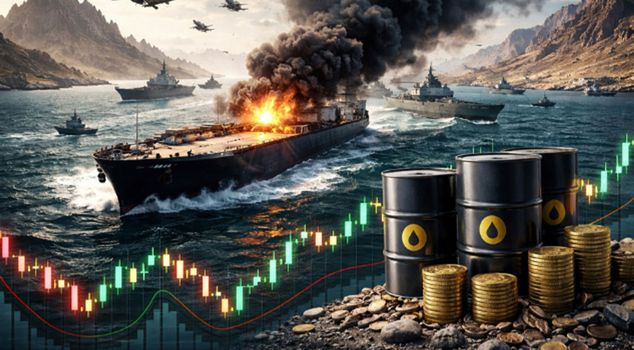
With the joint attacks of the US and Israel on Iran and Iran targeting commercial vessels passing through the Strait of Hormuz in retaliation, the shipment of oil and petroleum products reaching 20 million barrels daily in the Strait has come to a standstill. The deepening concerns over supply in the oil market are causing sharp fluctuations in prices.