23.03.2026 12:20
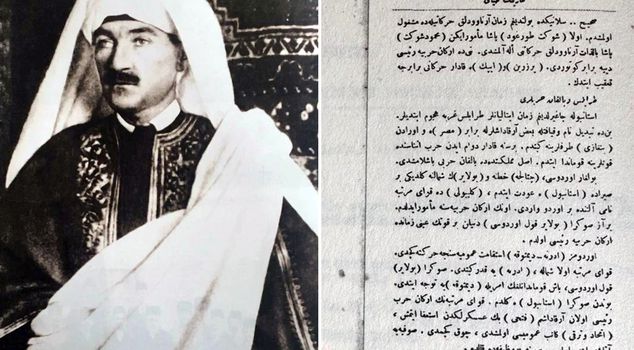
A photograph of Mustafa Kemal Atatürk taken in 1911 in Tripoli caused controversy when it was published in a foreign magazine during the early years of the Republic, as it was deemed "contrary to general politics," leading to its withdrawal.
A photograph of Mustafa Kemal Atatürk taken in 1911 in Tripoli has emerged to have sparked discussions after its publication in the early years of the Republic.
HE WENT AS "JOURNALIST SHEREF BEY"
In the photograph taken during the period when Mustafa Kemal Atatürk voluntarily went to Tripoli as an Ottoman officer under the identity of "Journalist Sheref Bey," he is seen wearing local attire. The photo, which was considered an ordinary snapshot at the time, gained a different meaning years later.
IT DID NOT CAUSE A REACTION IN THE FIRST PUBLICATION, LATER IT WAS CONFISCATED
The photo was first used in the "Golden Book of the Turk" published in 1928 and did not attract any reaction. According to the information provided by Hürrem Elmasçı in his column, the process changed when the same snapshot was featured in the French publication La Turquie Moderne. After correspondence between state institutions, a decision was made to confiscate the magazine. The decree stated that the photo was described as "fabricated."
"INCONSISTENT WITH GENERAL POLITICS" ASSESSMENT
The official justification stated that the photo was "inconsistent with the general politics of the country." The magazine's foreign connections were also emphasized in the correspondence. According to experts, the core of the debate was not the technical accuracy of the photo, but the meaning it represented. It was assessed that Mustafa Kemal in the snapshot taken in Tripoli portrayed a different profile from the leader image created during the Republic period.
THE MEANING BEHIND THE HISTORICAL SNAPSHOT
The idea that Mustafa Kemal, seen in the photo as an Ottoman officer and in local attire, was reflected as "a part of the old world" made its use in international publications controversial. Therefore, while the circulation of the photo in question was restricted, who took it remained unclear. It is estimated that the person who took the snapshot was either a soldier or a local photographer present in the region at that time.