11.04.2026 07:40
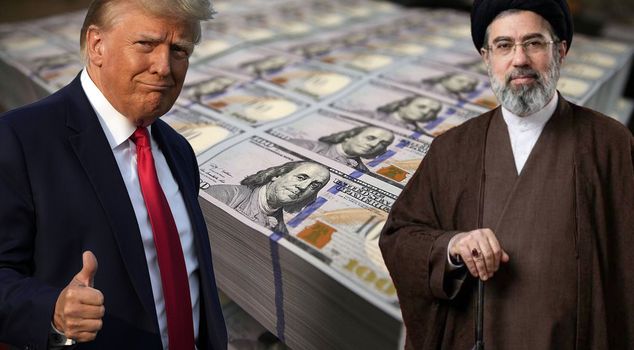
Iran and the US are preparing to sit at the negotiation table in Pakistan after a 40-day war. Ahead of the talks, statements from both sides have been coming in succession, while Pakistani Prime Minister Shahbaz Sharif announced that both countries would be in Islamabad today. It was reported that the US has agreed to release 6 billion dollars regarding the release of frozen assets, which Iran has brought up as a precondition for the negotiations.
The United States and Iran are coming together for a critical meeting in Islamabad, the capital of Pakistan, with the aim of ending the war in the Middle East.
Following Israel's attacks on Lebanon, a clear statement has come from Pakistan regarding the uncertain talks. Pakistani Prime Minister Shahbaz Sharif announced that both countries would be in Islamabad, indicating that the process is ongoing.
Sharif described the talks as a "historic opportunity," emphasizing the need to prioritize diplomacy over war. He stated that Pakistan would make intense efforts for the success of the talks while also pointing out the challenges of the process.
IRAN HAS LAID OUT ITS CONDITIONS
The Iranian delegation, led by Parliament Speaker Mohammad Baqir Qalibaf, has arrived in Islamabad. Qalibaf stated that a ceasefire must be established in Lebanon before the meetings in Pakistan, and he also mentioned the release of Iran's frozen assets as a precondition. Iranian media reported that the talks would begin if these conditions are accepted.
CRITICAL STEP FROM THE US: $6 BILLION WILL BE RELEASED
An important development has occurred regarding one of the conditions put forth by Iran. The United States has agreed to release $6 billion from frozen funds belonging to Iran. Qatari and South Korean officials are working to transfer these funds to Iran within a few days.
The value of Iran's frozen assets in international accounts is estimated to be between $100 billion and $120 billion.
TRUMP THREATENS AGAIN
US President Donald Trump stated, "We are loading better weapons and ammunition onto our ships than those we used to strike Iran before. If there is no agreement, we will use our weapons very effectively."
Speaking to the New York Post, the US President said, "We will know what will happen within 24 hours. We are dealing with people whose honesty we do not know."
In his latest statement, Trump said that the Strait of Hormuz would be opened regardless of the circumstances. Before boarding the plane while leaving the capital Washington, President Trump answered questions from reporters.
Regarding the first condition of a possible agreement, he stated, "There will be no nuclear weapons. You know, I think regime change has already happened, but we never set that as a criterion. Our only criterion was the absence of nuclear weapons. This clause constitutes 99% of the agreement."
Stating that "Iran's naval forces have been destroyed, the air force, all anti-aircraft systems, and leaders have been eliminated. The entire country has been destroyed," the US President said they would not allow the Tehran administration to charge for passage through the Strait of Hormuz.
Trump, who said that the Strait of Hormuz would "automatically open" after a possible agreement, indicated that they do not need a backup plan for negotiations with Iran, stating, "You don't need a backup plan. We already have a plan. The opposing side's army has been defeated, and their military power has been completely destroyed."
US DELEGATION HAS SET OUT: IF THEY TRY TO STALL US, THEY WILL SEE THAT OUR NEGOTIATING TEAM WILL NOT BE VERY WARM TO THIS
The US delegation has set out for Pakistan. While boarding the plane, US Vice President J. D. Vance made a statement, saying, "We are looking forward to the talks. I think it will go positively. If the Iranians are willing to negotiate in good faith and are open to compromise, that would be a different situation. However, if they try to stall us, they will see that our negotiating team will not be very warm to this. The President has given us very clear instructions; we will see how the process will proceed."
IRAN DELEGATION IN ISLAMABAD
As uncertainty continues regarding the ceasefire talks between Iran and the US, Iranian state television announced that the negotiation delegation led by Parliament Speaker Mohammad Baqir Qalibaf has arrived in Islamabad for planned talks with the US. The delegation includes Foreign Minister Abbas Araghchi, representative of Iran's religious leader Mojtaba Khamenei in the Defense Council Ali Akbar Ahmadian, Central Bank of Iran President Abdolnaser Hemmati, and several members of parliament. The report also stated that the delegation, consisting of security, political, military, economic, and legal committees, would begin talks with the US side if Iran's preconditions for the start of negotiations are accepted.
QALIBAF: WE HAVE GOODWILL, BUT NO TRUST
According to Tasnim News Agency, Qalibaf responded to journalists' questions at Islamabad Airport regarding US Vice President JD Vance's recent statements. Mohammad Qalibaf stated, "Unfortunately, our negotiation experience with the US has always resulted in failure and their failure to keep their promises. In less than a year, while negotiations were ongoing twice, despite the goodwill of the Iranian side, they attacked us and committed numerous war crimes. We have goodwill, but we do not have trust."
WHO IS IN THE DELEGATIONS?
In today's talks, the US side will be represented by a delegation led by Vice President JD Vance. The delegation also includes White House Special Representative Steve Witkoff and Trump's son-in-law Jared Kushner.
The Iranian side is led by Parliament Speaker Mohammad Baqir Qalibaf. Foreign Minister Abbas Araghchi, Secretary of the Defense Council Ali Akbar Ahmadian, Central Bank of Iran President, and several members of parliament will also participate in the talks. It is still unclear whether the parties will meet directly or indirectly.
RED ALERT DECLARED IN ISLAMABAD
As Iran continues to insist on including Lebanon in the ceasefire following Israel's intensified attacks on Lebanon, silence prevails in Islamabad, the capital of Pakistan, ahead of tomorrow's talks. Following the US-Israel attacks on Iran that began on February 28, a temporary ceasefire was established on April 8, and security measures have been increased in Islamabad, where the negotiations are set to take place. In preparation for the US-Iran peace talks, more than 10,000 police and security personnel have been deployed to ensure the safety of visiting delegations, and a "red alert" status has been declared in the capital. Pakistani officials, who began to increase security measures yesterday, closed all roads leading to the Old Airport Road and Nur Khan Air Base by placing containers and barbed wire.
US AND ISRAEL - IRAN WAR
The US and Israel began their attacks on Iran targeting the country's military and nuclear infrastructure on February 28, resulting in the death of Iran's religious leader Ali Khamenei. The Tehran administration responded by effectively closing the Strait of Hormuz, through which approximately one-fifth of global oil and natural gas passes, to the attacks that claimed the lives of at least 3,000 people in Iran. This decision by Iran also caused energy prices to soar and disrupted global trade. The US and Iran agreed to a two-week ceasefire on April 8, mediated by Pakistan. The ceasefire is expected to end on April 22.
WHAT'S ON THE TABLE?
Pakistan, which was the first to recognize Iran's independence in 1947, plays a significant role in the US-Iran ceasefire. Therefore, the parties agreed to hold the negotiations in Islamabad. The talks are expected to address Washington's 15-point proposal focusing on Iran's enriched uranium and the reopening of the Strait of Hormuz, as well as Iran's 10-point plan demanding control of the strait, transit fees for ships passing through the strait, the cessation of all regional military operations, and the lifting of all sanctions.
Kalibaf stated that the US side is ready for a real agreement, and if the Iranian side grants the rights of the Iranian people, they are also ready for an agreement. He said, "In the current war, we have shown them this; if they want to use negotiations as a futile show and deception operation, we are also ready to obtain our rights by relying on our faith in God and the strength of our people."
One of the important points of the negotiations is Lebanon. Israel's continued attacks targeting Hezbollah after the ceasefire came into effect influenced whether the negotiations would take place. Considering Iran's insistence that the ceasefire also includes Lebanon and its declaration that it will not participate in the talks unless a ceasefire is established in Lebanon, one of the topics on the table in the upcoming negotiations will also be Lebanon.