11.04.2026 00:34
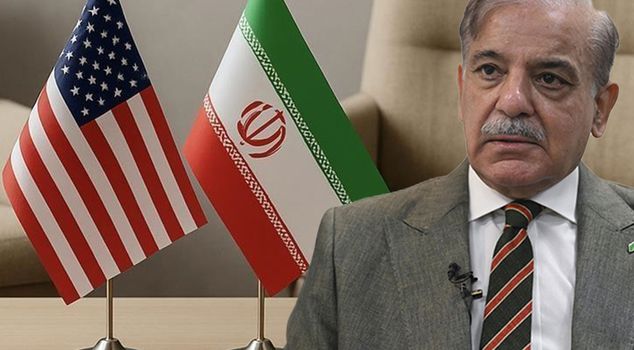
Pakistan's Prime Minister Shahbaz Sharif, who is preparing to host negotiations planned between Iran and the United States, described the talks as a "make or break moment" for a permanent ceasefire. Sharif stated, "Pakistan will do its best to ensure the success of the negotiations, which is a difficult task. The outcome is in God's hands."
Pakistan Prime Minister Shahbaz Sharif addressed the nation in a speech, mentioning the planned negotiations between Iran and the USA in the capital Islamabad.
"THIS STAGE OF THE TALKS IS A MAKE OR BREAK MOMENT IN THE SEARCH FOR A PERMANENT CEASEFIRE”
Sharif described the talks as a "historic opportunity," stating that negotiations should take place instead of war. Sharif said, "Tomorrow, the leaders of both countries (the USA and Iran) will be in Islamabad to negotiate at our invitation. Pakistan will do its utmost to ensure the success of the talks, which is a difficult task. The outcome is in God's hands."
Thanking Iran and Pakistan for accepting the talks and a two-week ceasefire, Sharif shared the view that "Pakistan hosting these talks is a proud moment not just for Pakistan, but for the entire Muslim world." He pointed out that after the meetings in Islamabad, the parties would decide whether to continue these talks or not, stating, "This stage of the talks is a make or break moment in the search for a permanent ceasefire."
IRAN DELEGATION IN ISLAMABAD
As uncertainty continues regarding the ceasefire talks between Iran and the USA, Iranian state television announced that the negotiation delegation led by Parliament Speaker Mohammad Baqir Qalibaf has arrived in Islamabad for the planned talks with the USA. The delegation includes Foreign Minister Abbas Araghchi, the representative of Iran's religious leader Mojtaba Khamenei in the Defense Council, Ali Akbar Ahmadian, the Governor of the Central Bank of Iran Abdolnaser Hemmati, and several members of parliament. The report also stated that the delegation, consisting of security, political, military, economic, and legal committees, would begin talks with the USA if the preconditions set by Iran for the start of negotiations are accepted.
TWO CONDITIONS SET
Before departing for Islamabad, Qalibaf shared a message on social media outlining his country's conditions for participating in the talks. He noted that the two mutually agreed conditions for starting talks have not yet been fulfilled, stating, "A ceasefire in Lebanon and the release of Iran's blocked assets must be fulfilled before the negotiations begin."
USA DELEGATION ON THE WAY: IF THEY TRY TO STALL US, THEY WILL SEE THAT OUR NEGOTIATION TEAM WILL NOT BE VERY WARM TO THIS
On the other hand, the USA delegation has also set off towards Pakistan. J.D. Vance, the Vice President of the USA, made a statement while boarding the plane, saying, "We are looking forward to the talks. I believe it will go positively. If the Iranians are willing to negotiate in good faith and are open to compromise, that would be a different situation. However, if they try to stall us, they will see that our negotiation team will not be very warm to this. The President has given us very clear instructions; we will see how the process unfolds."
RED ALERT IN ISLAMABAD
Following Israel's intensification of attacks on Lebanon, Iran's insistence on including Lebanon in the ceasefire continues, while silence prevails in Pakistan's capital Islamabad ahead of tomorrow's talks. After the temporary ceasefire achieved on April 8 following the war that began with the USA-Israel attacks on Iran on February 28, security measures have been increased in Islamabad, where the negotiations are set to take place. In preparation for the peace talks between the USA and Iran, more than 10,000 police and security personnel have been deployed to ensure the safety of visiting delegations, and a "red alert" status has been declared in the capital. Pakistani authorities, who began to increase security measures yesterday, closed all roads leading to the Old Airport Road and Nur Khan Air Base by placing containers and barbed wire.
USA AND ISRAEL - IRAN WAR
The USA and Israel began their attacks on Iran targeting the country's military and nuclear infrastructure on February 28, during which Iran's religious leader Ali Khamenei was killed. The Tehran administration responded to the attacks, which resulted in the deaths of at least 3,000 people, by effectively closing the Strait of Hormuz, through which about one-fifth of global oil and natural gas passes. This decision by Iran also caused energy prices to soar and disrupted global trade. The USA and Iran had agreed to a two-week ceasefire on April 8, mediated by Pakistan. The ceasefire is expected to end on April 22.
WHAT'S ON THE TABLE?
Pakistan, which was the first to recognize Iran's independence in 1947, plays a significant role in the USA-Iran ceasefire. Therefore, the parties agreed to hold the talks in Islamabad. The discussions are expected to address Washington's 15-point proposal focusing on Iran's enriched uranium and the reopening of the Strait of Hormuz, as well as Iran's 10-point plan demanding control of the strait, transit fees for ships passing through the strait, the cessation of all regional military operations, and the lifting of all sanctions.
One of the key points of the negotiations is Lebanon. Israel's continued attacks targeting Hezbollah after the ceasefire came into effect have influenced whether the negotiations will take place. Considering Iran's insistence that the ceasefire must include Lebanon and its declaration that it will not participate in the talks unless a ceasefire is achieved in Lebanon, Lebanon will also be one of the topics on the table in tomorrow's negotiations.
WHO ARE THE NEGOTIATORS?
It is expected that Parliament Speaker Mohammad Baqir Qalibaf will lead the Iranian delegation, accompanied by Iran's Foreign Minister Abbas Araghchi. The USA is expected to be represented by Vice President J.D. Vance. In addition to Vance, the USA delegation will also include Steve Witkoff, the Special Representative for the Middle East for President Donald Trump, and his son-in-law Jared Kushner.