21.03.2026 09:23
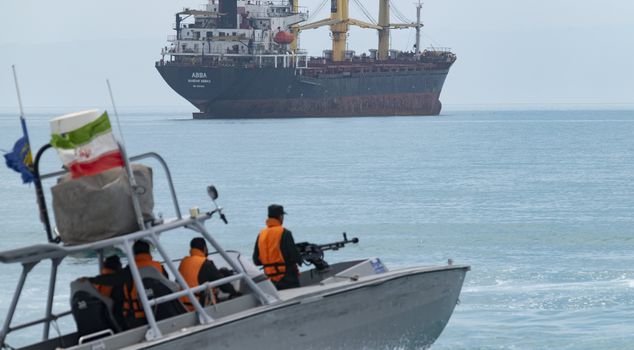
Iran's Foreign Minister Abbas Araghchi stated that the Strait of Hormuz is not completely closed, saying, "We have not closed the strait. It is open." Araghchi mentioned that they are ready to ensure safe passage through the Strait of Hormuz for countries like Japan that will establish contact with the Tehran administration. He conveyed that they are pleased with the long-standing friendly relations between Tokyo and Iran.
Iran's Foreign Minister Abbas Araghchi made statements to the Japan-based Kyodo news agency regarding the war launched against Iran and the situation in the Strait of Hormuz.
Describing the ongoing conflict as "a war imposed on Iran," Araghchi reminded that Tehran was in the negotiation process with the Washington administration when the attacks began.
"OUR ACTIONS ARE DEFENSE-ORIENTED"
Araghchi reiterated that the war being waged against Iran is "an illegal and unprovoked act of aggression," emphasizing that Iran's actions are defense-oriented and will continue "as long as necessary."
"WE DID NOT CLOSE THE STRAIT"
Araghchi also addressed the situation in the Strait of Hormuz. Emphasizing that the Strait is not completely closed, Araghchi stated, "We did not close the Strait. It is open." However, he expressed that they have imposed restrictions on the use of the strait for ships belonging to countries that support attacks against Iran. Araghchi mentioned that they are ready to ensure safe passage through the Strait of Hormuz for some countries, like Japan, that will establish contact with the Tehran administration.
ARAGHCHI CALLS ON THE INTERNATIONAL COMMUNITY TO TAKE A STAND
Calling on the international community, including Japan, to take a stand against the attacks on Iran, Araghchi conveyed their satisfaction with the Tokyo administration's "balanced and fair" stance and its long-standing friendly relations with Iran.
"WE WANT THE WAR TO END PERMANENTLY"
Araghchi stated that many countries have made mediation efforts to end the conflict and expressed that Iran is "open to any initiative," indicating their readiness to evaluate proposals. Noting that they do not believe the U.S. is ready for a genuine solution, Araghchi emphasized that Iran wants "not a ceasefire, but a complete, comprehensive, and permanent end to the war."
U.S.-ISRAEL ATTACKS ON IRAN
While negotiations between Tehran and Washington administrations were ongoing, Israel and the U.S. launched a military attack on Iran on February 28. Iran responded with attacks on targets it identified in some regional countries, including Qatar, the United Arab Emirates (UAE), and Bahrain, where U.S. bases are located, in addition to Israel.
In the U.S.-Israel attacks, Iranian leader Ali Khamenei, along with many high-ranking officials, was killed. According to Iranian officials, the death toll from the U.S.-Israel attacks has exceeded 1,348, and the number of injured has surpassed 17,000.