29.12.2025 13:36
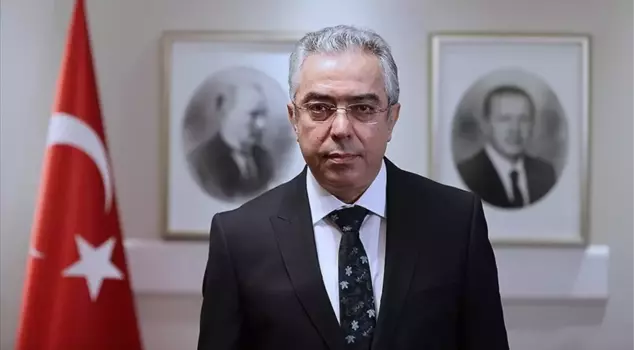
The President's Chief Advisor and Deputy Chairman of the Presidential Legal Policies Council, Mehmet Uçum, wrote for AA Analysis about the characteristics of democratic politics and how leadership styles have become decisive.
The Chief Advisor to the President and Deputy Chairman of the Presidential Legal Policies Board, Mehmet Uçum, wrote for AA Analysis about the characteristics of democratic politics and how leadership styles have become decisive.
In fact, discussions about democracy and democratic politics are always intriguing and create an agenda. The impact of the transition process to a terrorism-free Turkey, which expands democratic politics and opens up more space, is very concrete. It is already understood that once the transition process is completed, the opportunities to develop and strengthen democracy will be much stronger. In such an environment, a discussion about the characteristics of democratic politics gains even more meaning.
DEMOCRACY AND DEMOCRATIC LAW
If we need to remind ourselves about democracy, we can refer to some of the findings in the literature. Democracy can be defined as a governance based on the will of the people, in other words, the operation of a state's political system by the will of the people. The forms of democracy are accepted, at least theoretically, as direct, semi-direct, and representative democracy. The most common form of application is representative democracy. In democracies, all models of government, including presidential, semi-presidential, and parliamentary systems, can be observed. There are numerous discussions regarding the types of democracy, such as liberal, conservative, national, social, patriotic, socialist, sovereign, radical, and militant democracy. Democracy is effective in many areas, including political, economic, and cultural democracy. Additionally, according to place-based democratic approaches, distinctions are made regarding democracy in the family, workplace, school, as well as local, national, regional, and global democracy.
DEBATES ON DEMOCRACY HAVE LONG BEEN CONDUCTED UNDER THE INTELLECTUAL MONOPOLY OF WESTERNISM
There are many approaches and discussions regarding all these issues related to democracy. These discussions have long been conducted under the intellectual monopoly of Westernism. However, with the exposure of elitist ideological approaches that view democracy as belonging to the West and reduce it to Western values, the debate on democracy has transformed into a general and neutral legal discussion today. At this stage, democracy can now be expressed as a political and legal principle that ensures the operation of the political system based on the will of the people. The systemic foundations of this principle are determined by democratic law.
THE MAIN ELEMENTS OF DEMOCRATIC LAW ARE AS FOLLOWS
General and equal voting rights,
Diversity of options and freedom of elections (free elections),
Single-tier elections,
Secret ballot and open counting,
Judicial administration and oversight in elections,
Supremacy of the voter's will,
Principle of trust in the public and their elected representatives,
Principle of social, political, and legal measures and sanctions,
Opportunities for participation in governance,
Public initiatives (the right of the public to propose laws, the right of recall, referendums, etc.),
Functional separation of powers,
Principle of democratic legitimacy in the formation of powers,
Principle of resolution based on democratic legitimacy and the will of the people in inter-power disputes,
Principle of change based on the protection of national accumulation and democratic gains, that is, continuity.
All these elements have a capacity and depth that require detailed examination. A political system based on these elements of democratic law can be considered a democracy with high legitimacy, operating based on the will of the people and legal oversight.
NEW CHARACTERISTICS OF DEMOCRATIC POLITICS AND DEMOCRATIC LEADERSHIP
The profile of the cultural leader and the ideologically decisive leader in democratic politics is a highly debated topic. Many evaluations have been made regarding the political style of strong leaders. Apart from the leadership classification that aligns with Max Weber's types of authority—traditional, charismatic, and legal/rational authority—many different leadership examples can also be observed.
Generally speaking, the perspectives of leaders on types of democracy and their understanding of democracy determine their political styles. The prevailing understanding of representative democracy today emphasizes representative politics. Representative politics inherently puts forward claims based on doing the best for the public. The leader who does this is a representative leader. In other words, representative politics actually manifests as thesis politics. The representative leader believes that they produce the best thesis for the public. They expect the public to adopt their thesis and support them. In fact, some leaders expect this thesis to be implemented without hesitation or questioning. Thus, intellectual pioneering leadership emerges. Accordingly, the leader presents ideal theses, and everyone follows and implements them.
The transformation of legitimized social demands into democratic politics and the development of democratic programs through the optimization of social demands are not commonly found in the world of such pioneering or representative leaders.
This type of leadership has been proven to be problematic with many practical examples. It is also observed that those who lead in this style have not been able to achieve long-term success in democratic politics.
This is because representative leaders have either not practically encountered "direct politics" or have not turned to direct politics. They consider reaching "representative politics" sufficient. They see themselves as "intellectual/pioneering leaders" rather than "spokesperson leaders." They advocate for "thesis democracy" rather than "demand democracy."
However, in representative democracies, the only political style is not representative politics. Today, the political style we refer to as demand politics is increasingly coming to the forefront in representative democracies. The type of leadership required by demand politics is taking shape as direct leadership, in other words, spokesperson leadership.
It should be added here that the personality traits of the leader are the subjective element of leadership. Regardless of the type of leadership, the personality traits of the leader have a positive or negative impact on that leadership type. This situation is concretely evaluated in every leadership practice. However, the essential elements of correct and effective leadership are objective elements. These elements are currently phenomena that highlight people-based politics and spokesperson leadership. Leaders who act in accordance with this objective need can demonstrate minimally effective and successful leadership practices beyond their personality traits. Additionally, strong personality traits of the leader can elevate this leadership style to a much more effective and successful level. For this reason, President Erdoğan's leadership is very instructive.
THE POLITICAL STYLE AND LEADERSHIP CHARACTERISTICS OF PRESIDENT ERDOĞAN
President Erdoğan's political history and the practices he has implemented regarding demand politics and direct leadership are a very important example. The innovations that President Erdoğan has brought to the style of politics and leadership have significantly changed the foundations of democratic politics in Turkey.
By implementing people-based direct politics, that is, demand politics, instead of representative politics in Turkey, President Erdoğan has achieved a radical change in the way politics is conducted.
One of the most important outcomes of this is the emphasis on "demand democracy" instead of "thesis democracy."
Thesis democracy is based on representative politics. It primarily occurs as a practice where what is considered best for the people is developed by political elites, transformed into a thesis, and presented to the public in an attempt to gain their support. As a result, an elitist style of politics emerges.
On the other hand, demand democracy is based on demand politics. It comes to life as a practice where the political program produced through the demands and needs of the people affects the political system. Consequently, it necessitates a sociological style of politics.
In this context, President Erdoğan has fundamentally changed the type of leadership by acting as a direct voice or even an organ of the people instead of representative leadership.
As a positive observation, President Erdoğan's leadership is "Direct and Organic Political Leadership," which is a new type of leadership. This leadership practice has a uniqueness that cannot be fully explained by previously classified political leaderships.
Of course, one of the most significant outcomes of direct leadership in relation to the masses is the feeling of "complete trust in the leader," which greatly strengthens the belief in the leader's perspective. As a result, even when the masses are not entirely sure or have different thoughts, they adopt and support the leader's approaches. In this respect, another characteristic of President Erdoğan's leadership stands out. We refer to it as "transformative leadership."
From now on, no political actor in Turkey has the chance to achieve great success without engaging in sociological politics and producing organic/direct leadership practices.
Thus, another dimension that strengthens Turkish democracy is this change in the style of politics and leadership practice. From now on, the only politics that can gain high legitimacy in Turkey is politics based directly on the people. It is about transforming the demands and needs of the people into a democratic political program.
CONCLUSION
At the stage we have reached in the democratic world, representative democracies are experiencing serious crises. While there are many reasons for these crises, the styles of politics and leadership draw more attention among these reasons.
Now, representative politics, representative and pioneering leadership, and thesis democracy approaches cannot prevent the erosion of the relationship between the people and representative democracies. In the West, the public's increasing alienation from representative democracy has become a normal situation, and this state is becoming increasingly accepted. For this reason, politics based directly on the people, that is, demand politics, direct leadership instead of representative and pioneering leadership, spokesperson and transformative leadership, and demand democracy based on the people's program instead of thesis democracy based on the programs of political elites are seen as prominent remedies today. These new approaches can bring representative democracies closer to direct democracies, improving the relationship between the people and the political system, and can be an effective measure against alienation.
The greatest strength of democracies is the will of the people. The way to make the will of the people as effective as possible in the functioning of the political system is through people-based politics and direct leadership. In this context, it should be emphasized that President Erdoğan's style of politics and leadership could be a very effective and guiding example for bringing representative democracies out of the leadership and political crisis.