09.04.2026 14:52
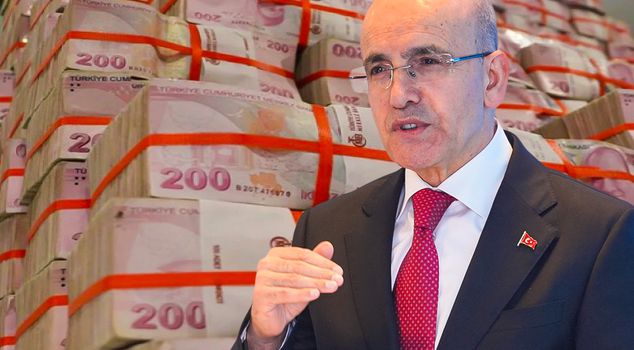
The Minister of Treasury and Finance, Mehmet Şimşek, regarding expectations for withholding tax reduction, stated, "We will continue to tax those who make money from money. Very clearly. Neither an increase nor a decrease in withholding tax is currently on our agenda." Speaking about the tax amnesty, Minister Şimşek said, "If it is a search for a restructuring of a tax amnesty, absolutely not. Very clearly, there will be no amnesty."
The Minister of Treasury and Finance, Mehmet Şimşek, answered questions related to the agenda in a joint broadcast of BloombergHT and Habertürk. Regarding expectations for withholding tax reductions, Şimşek stated, "We will continue to collect taxes from those who earn money from money. Reductions and increases in withholding tax are not on our agenda," and emphasized clearly that there will be no tax amnesty.
"REACHING A CEASEFIRE IS SATISFYING"
Pointing out that the war in the region has deeply affected the global economy, especially due to the Strait of Hormuz being a center for production and supply, Şimşek said, "Reaching a ceasefire is satisfying, and hopefully, this process will be completed smoothly. However, even if it stops in this form, returning the disruptions in the supply chain to pre-crisis levels will likely take months, depending on the product." he stated.
"THERE IS A RISK OF RISING GLOBAL INFLATION"
Şimşek conveyed that global inflation expectations have risen due to these risks, stating, "We are facing the risk of rising global inflation. Because costs are increasing, raw material prices are rising."
He noted that when inflation expectations rise, global financial conditions tighten, and forecasts for global growth carry downward risks, continuing his remarks:
"A decrease in risk appetite triggers fund outflows from many developing countries. The strengthening of the dollar is significant during this period. Therefore, when you look at the big picture, if this shock continues, the ceasefire has been established now, but if it breaks, having oil prices at $118 or above, along with related natural gas and other raw material prices, will likely include a decline in global growth, an increase in global inflation, stagflation, and even the risk of a global recession. I hope the ceasefire is maintained, and a final agreement is reached. In this case, expectations in the global economy will quickly turn positive, which is currently the base scenario. Although the renovation of the affected facilities in the Gulf may take some time to become functional again, I believe it will quickly reflect on prices. Indeed, you saw that yesterday. Therefore, what is important here is the continuation of this ceasefire. Along with that, it is the reconstruction of those supply chains again."
Şimşek reported that the macroeconomic fundamentals of developing countries are generally solid, stating, "Once things settle down, we will see which country has a story, which country's macroeconomic policies are healthy, and which country's fundamental balances, such as budget balance and external balance, are strong. These will be looked at. The risk pricing in Turkey dropped dramatically yesterday. This means that it is not actually a Turkey-specific issue being priced in. The outlook on Turkey's macroeconomic fundamentals is quite positive, but ultimately this is a significant shock, and the effects of this shock are being priced both regionally and globally. Therefore, the likelihood of risk appetite returning is high." he evaluated.
"LAST YEAR WE PROVED OUR MATURITY"
Indicating that Turkey's capacity to manage shocks is good, Şimşek used the following expressions:
"Last year we proved our maturity. Last year, very significant shocks occurred both domestically and internationally. When we look regionally, there is a 12-day war. It may not have been as effective as today, but it was significant; trade wars, for example, greatly affected risk appetite and created a lot of uncertainty. Last year, we faced a drought shock. We even faced a frost shock in agriculture. We could expand the list, but last year this program proved its maturity against all these shocks. On one hand, it also demonstrated that our capacity to manage shocks is indeed strong."
"WE PRIORITIZED THE HEALTHY FUNCTIONING OF MARKETS"
Şimşek stated that immediately after the war began, he gathered all relevant units and convened the Financial Stability Committee.
He noted that in the meeting, they decided what needed to be done to limit the effects of the shock and the war on Turkey, saying, "Managing the reactions of economic actors both domestically and internationally is very valuable. Therefore, we prioritized the healthy functioning of the markets."
Şimşek pointed out that the stock market has performed much more resiliently compared to countries like South Korea and Indonesia, stating, "Turkey has performed better than developing countries, which is significant."
"IF THERE WAS NO ESCALATION MOBILE, DIESEL WOULD BE 103 TL, NOT 86 TL"
Şimşek noted that Turkey is a significant oil importer and is close to the region where the war is taking place, stating, "Despite this, if we have limited these effects today, it is a reflection of this proactive approach."
He conveyed that they do not want the gains achieved through Turkey's economic program to be wasted, stating, "The essence of this program is to combat the cost of living, to achieve disinflation. The implementation of the escalated mobile system under the leadership of our President clearly shows what we prioritize. We limited the increase in primary input prices like diesel and gasoline by managing it through the budget. This is important in terms of competitiveness. This is important in terms of inflation. If we had not implemented the escalated mobile system, according to the latest data, for example, the price of diesel would have been 103 lira, whereas it is 86 lira. For example, the price of gasoline would have been 78 lira, whereas it is 64 lira. To manage this through the budget, you must have made the budget solid. If there is a buffer, you can activate the buffer." he evaluated.
"WE HAVE NO WITHHOLDING TAX ON OUR AGENDA"
In response to a question about expectations for a reduction in withholding tax on deposits and funds, Şimşek stated that they will continue to collect taxes from everyone according to what they earn.
Şimşek provided information that they will continue to implement regulations to collect more tax from those who earn more, stating, "Before the program, there was either no tax or it was very symbolic on KKM and other types of deposits. We will continue to collect taxes from those who earn money from money. Very clearly. Therefore, we currently have no withholding tax on our agenda. Neither an increase nor a reduction in withholding tax is currently on our agenda."
"THERE WILL NEVER BE A TAX AMNESTY"
Şimşek also evaluated requests for restructuring tax debts, stating:
"If our companies in distress apply to our tax offices, we are providing all kinds of convenience and installment options. The purpose of restructuring is if someone says, 'I have a temporary problem in my cash flow, I am facing a difficulty, can you make installments for me?' that already exists, it is permanent. We have currently established a permanent restructuring system. If it is a search for a restructuring of a nature akin to a tax amnesty, absolutely not. Very clear."