06.02.2026 07:52
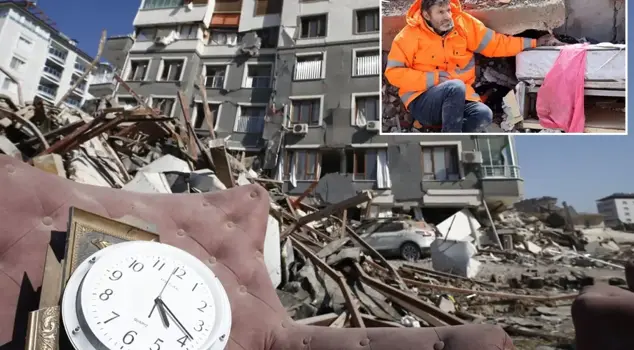
Turkey was shaken by the pain of the earthquakes measuring 7.7 and 7.6 that affected 11 provinces centered in Kahramanmaraş three years ago today. In the earthquakes on February 6, which affected approximately 14 million citizens, 53,537 people lost their lives, and 107,213 people were injured. All state resources were mobilized in the earthquake zone, and 455,000 housing units were built with the construction of the century.
Turkey was shaken by the pain of the earthquakes that occurred in Pazarcık at 04:17 with a magnitude of 7.7 and in Elbistan at 13:24 with a magnitude of 7.6 on February 6, three years ago. The earthquakes, which directly affected 14 million citizens in an area of 120 thousand square kilometers, caused severe destruction in 11 provinces, 124 districts, and 6,929 villages and neighborhoods. With the declaration of a 7-day national mourning and a state of emergency, all state resources were mobilized. In the disaster of the century, 53,537 people lost their lives, and 107,213 people were injured.
650 THOUSAND PERSONNEL WERE ON DUTY
After the earthquake, where public institutions, local administrations, non-governmental organizations, and volunteers were mobilized, all essential living materials, especially water, food, medicine, and clothing, were quickly sent to the region. Search operations were conducted in 39 thousand rubble sites that were damaged in the earthquakes, and search and rescue activities were carried out in 26 thousand 32 buildings where life was determined. A total of 650 thousand personnel, including 11,488 international, 35,250 search and rescue, and 142 thousand security personnel, were on duty in the intervention efforts in the region.
20 thousand vehicles and heavy machinery, 141 helicopters, 182 planes, and 23 ships worked tirelessly to provide aid to the earthquake zone. The ships of the Naval Forces Command were delivered to the region for assistance. A total of 17,500 sorties were carried out for sanitary evacuation, personnel transport, material transport, and firefighting activities using air vehicles. Under the leadership of Turkish Airlines (THY), more than 2 million passengers were transported with 13,701 flights and 712 cargo flights, delivering 32,770 tons of aid materials. Additionally, domestic and national unmanned aerial vehicles also supported search and rescue and coordination efforts in the earthquake zone. Following the disaster of the century, 3 million 549 thousand 443 disaster victims were evacuated from the earthquake zones under the coordination of AFAD by land, air, and sea.
350 TENT CITIES AND 428 CONTAINER CITIES WERE ESTABLISHED
In the 11 provinces affected by the disaster, areas for tent and container cities were identified. Temporary shelter areas were created, and 1 million tents were dispatched, with 645 thousand tents set up in 350 tent cities. Approximately 2.5 million disaster victims were provided with shelter. A total of 1 million 188 thousand 218 disaster victims were hosted in facilities, with 477 thousand 952 people in the Credit and Dormitories Institution (KYK) dormitories and 710 thousand 266 people in the Ministry of National Education (MEB) dormitories. Additionally, 220 thousand containers were set up in 428 container cities. 707 thousand disaster victims were hosted in these containers. In addition to shelter in container cities, nutrition, education, health, and other social facilities were made available to citizens.
The Ministry of National Defense (MSB) mobilized its ships to create living spaces. Hospitals and schools were opened. The Ministry of Transport and Infrastructure provided accommodation for earthquake victims in the wagons of the Turkish State Railways (TCDD). Financial support was provided for food and grocery shopping for citizens staying in container cities in cooperation with AFAD and the Red Crescent under the coordination of the Ministry of Interior.
TCG BAYRAKTAR AND TCG SANCAKTAR SHIPS PROVIDED HEALTH SERVICES
More than 40 thousand soldiers, specialists, and technical personnel, including 57 battalions and 100 search and rescue teams, were on duty in the earthquake zone by the Turkish Armed Forces. 29 search and rescue dogs also supported these efforts. As a result, 327 people were rescued from the rubble by search and rescue teams. Aerial assistance was provided through 65 planes, 71 helicopters, including UAVs and armed UAVs, establishing an air bridge to transport rescue personnel and aid materials to the region, and to evacuate the injured and those wishing to leave the area.
From the center established in Adana İncirlik, more than 300 villages and 32 districts were reached. More than 6 thousand sorties were made by air vehicles, reaching the number of sorties made in a year within a month, and more than 22 thousand citizens were evacuated. Under the Maritime Transport Corridor, the TCG Sancaktar and TCG Bayraktar ships were sent loaded with search and rescue personnel and heavy machinery to İskenderun. The TCG İskenderun ship evacuated the injured and those wishing to leave the region to Mersin. 24 ships were kept on alert in Mersin, İskenderun, Antalya, Taşucu, and Kyrenia. In the earthquake zones, 9.5 million food packages were distributed, and with 112 field kitchens and 49 field bakeries, a daily capacity of 160 thousand hot meals and more than 400 thousand loaves of bread was reached, providing hot meals to 7.2 million citizens and distributing 13.8 million loaves of bread. Additionally, 4 food and water control laboratories were established for food and water safety.
After the transportation of materials on the TCG Bayraktar and TCG Sancaktar ships, health services were provided in the earthquake zone at the Role-2 level as a hospital. From the very first moment of the earthquake, all barracks and social facilities were opened for the use of disaster victims, and disaster victims were hosted in the mess hall and special training centers. Suitable military facilities were opened to serve, hosting thousands of people.
Units of the Turkish Armed Forces (TSK) set up 72 thousand tents, and all 3 thousand 700 cold climate tents in inventory were delivered to those in need. Tent and container production was carried out in military factories, especially in the factories in Bor, on a 24-hour basis, providing the dispatch of 13 thousand tents, 856 cold climate tents, and 529 containers to the places in need. As part of life support activities, 619 kitchens, bakeries, showers, laundries, toilets, and logistics bases were established in 9 provinces, and 251 Mehmetçik Schools were opened. The Göktürk satellite and UAVs scanned the region to capture images of the destruction, and the data obtained was shared with the Ministry of Environment, Urbanization, and Climate Change.
FROM THE DISASTER OF THE CENTURY TO THE CONSTRUCTION OF THE CENTURY: 455 THOUSAND HOUSES WERE BUILT
From the resources of the Central Government Budget, a total of 3.6 trillion lira (approximately 91.5 billion dollars) was spent by the end of 2025 for the compensation of the losses and damages caused by the earthquake and for the reduction of disaster risks.
In the three years following the earthquakes, public institutions, the private sector, non-governmental organizations (NGOs), and international organizations have been working intensively on damage recovery efforts as a result of needs assessments conducted in collaboration. While priority is given to meeting the housing needs of disaster victims, work on the construction of permanent housing has reached its final stages.
In the earthquake-affected region, a total of 433,667 houses and 21,690 workplaces have been drawn as a result of the lottery ceremonies held so far. In order to ensure the continuation of educational activities in the region, a total of 72 billion lira was spent for the construction of 13,321 classrooms, and 6.9 billion lira for the strengthening of 2,776 classrooms. When all construction works in the region are completed, a 15% increase in the number of classrooms compared to pre-earthquake levels is planned. A total of 5.1 billion lira was spent on the reconstruction, strengthening, and maintenance of faculty buildings of universities in the region, as well as the renewal of campus infrastructures. In the 2026 Investment Program, an allocation of 2.4 billion lira was set aside for the reconstruction, strengthening, maintenance, and repairs of buildings damaged in the earthquake for these universities.
WORK TO SUPPORT THE LABOR MARKET
To prevent job losses in the earthquake-affected region and to support the labor market, great importance was placed on active labor policies. In this context, a total of 60,582 people benefited from on-the-job training programs and vocational courses in 11 provinces in the earthquake region, with approximately 2.9 billion lira allocated to this area.
To ensure that the services provided by local governments in the provinces affected by the earthquake can be carried out without interruption, approximately 4 billion lira in cash resources were sent to local governments from the Central Government Budget for infrastructure investments, environmental arrangements, and the procurement of tools, equipment, and materials. Projects with a total project cost of 21.9 billion lira are meeting the urgent infrastructure and vehicle equipment demands of municipalities in the earthquake region. Approximately 51.1 billion lira was spent on repairing damage to energy infrastructure, primarily the electricity distribution network, by the end of 2025.
AGRICULTURE, TRANSPORTATION, AND INDUSTRY PROJECTS
By the end of last year, approximately 19.8 billion lira was spent on repairing damage to roads and highways. A total of 40 billion lira was spent to ensure access to new residential areas and social facility areas, and approximately 8.5 billion lira for the repair of urban roads.
For the repair of railway lines, an investment of 26.4 billion lira was made by the end of 2025, and it is planned to spend 31.5 billion lira on these lines by 2027. In the agriculture sector, a total of 17.4 billion lira in support payments was made in 11 provinces in 2025. Efforts are ongoing to improve economic activities, especially in the manufacturing industry, in the earthquake-affected region, which is an important production and export base for Turkey.
Investments in small industrial sites (KSS) have mobilized a total of 17.6 billion lira in resources through the support of the Small and Medium Enterprises Development and Support Administration (KOSGEB) and development agencies for industrialists in the region.
ACHIEVED A HOUSING PRODUCTION RATE OF 23 UNITS PER HOUR
The technical capacity reached in construction activities in the region has maximized the housing production rate. In line with the planning, 23 units are produced per hour, and an average of 550 units are produced daily for the use of disaster victims.
The constructed houses are designed not only as living spaces but also as holistic living areas with social facilities, parks, cultural areas, and city squares.
As a symbol of the significant progress in earthquake housing, the key to the 455,000th house was handed over to its rightful owner at a ceremony attended by President Recep Tayyip Erdoğan.
RURAL DEVELOPMENT AND SUPPORT FOR TRADESPEOPLE
Projects aimed at preserving the economic and social fabric of the region were not limited to city centers. As part of the efforts, 43,000 new shops were built in 11 provinces to revitalize the local economy. With the work carried out in 4,333 villages, 63,000 village houses were completed and delivered. An infrastructure project equivalent to Turkey's total coastline of 11,000 kilometers was implemented. Village houses and shops built in accordance with their original designs continue to play a critical role in the normalization of life in the earthquake-affected region.