07.03.2026 08:42
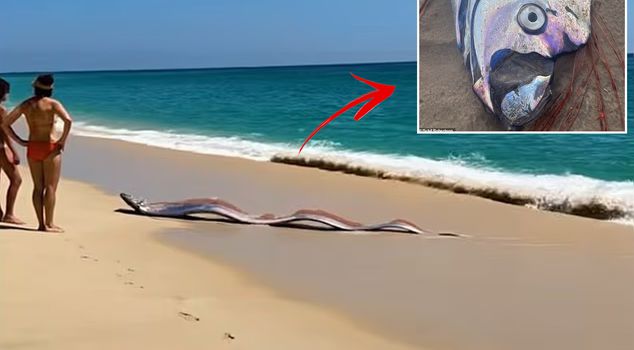
Two tourists vacationing on the beach in Cabo San Lucas, Mexico, encountered two rare giant manta rays in shallow waters. The appearance of this species, commonly known as the "devil fish," has brought old legends back to the forefront. One of the tourists who saw the fish said, "It was really incredible when I learned how rare it is. According to our research, seeing two at the same time is like a one in a billion chance."
Two American tourists, Monica Pittenger and her sister Katie, living in Prosper, Texas, noticed a strange glowing object in the water while relaxing on the beach in Cabo San Lucas, Mexico. When they approached, they saw that it was two manta rays, each about 9 meters long. The fact that this rare species, which lives in the deep ocean, came so close to the shore surprised the surrounding vacationers.
RARE CREATURE OF THE DEEP OCEAN
According to a report by DailyMail, manta rays typically live in the "twilight zone" of the ocean, which is found deeper than 900 meters. Therefore, encounters with this species are quite rare.
A study published by the Southern California Academy of Sciences in 2018 recorded that only 19 manta rays have been seen or washed ashore along the California coast in the last hundred years.
PANIC ON THE BEACH
In the footage recorded by Pittenger, two giant silver-colored, ribbon-shaped fish can be seen writhing on the sand and trying to reach the sea again. Noticing that the fish, which have wavy red fins on their backs, were struggling, Katie Pittenger immediately jumped into the water.
Vacationers nearby also helped Katie, who left her phone and belongings with her sister. Those on the beach carefully guided the two fish back into the sea. Shortly after, the fish swam away into the deep waters and disappeared.
BRINGING LEGENDS BACK TO THE FOREFRONT
The appearance of manta rays, known in Japanese folklore as "sea serpents" or "apocalypse fish," is based on a belief that associates them with major earthquakes and tsunamis in the past.
Before the 9.1 magnitude Tohoku earthquake and tsunami that occurred in Japan in 2011, numerous reports indicated that many manta rays had washed ashore along the Japanese coast. Similarly, this species has been reported before and after an earthquake in the Philippines, as well as in recent years along the coasts of Tasmania, India, and California.
SCIENTISTS OFFER DIFFERENT EXPLANATIONS
Scientists state that manta rays usually approach the shore when they are sick, injured, or about to die. However, the fact that the two fish seen in this incident had no visible injuries raised new questions about why they came ashore.
Manta rays can grow up to 11 meters and weigh around 270 kilograms, making them one of the longest bony fish in the world. Monica Pittenger described the moment they experienced, saying, "It was like something out of a science fiction movie. I had never seen anything like it in my life. When I learned how rare it was, it really felt incredible. According to our research, seeing two at the same time is like a one in a billion chance."