18.03.2026 11:24
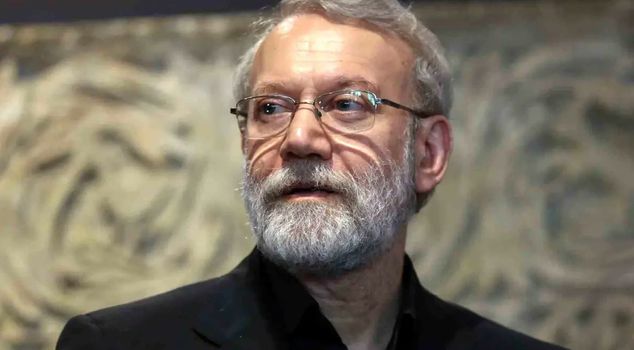
The assassination of Ali Larijani, the Secretary of Iran's Supreme National Security Council, in an Israeli airstrike has created a deep shock in the country's governance structure. The loss of Larijani, who was one of the key figures in critical decision-making, has plunged both the war strategy and internal balances into uncertainty. Following the assassination, it is assessed that military activity in Iran may increase and the leadership crisis could deepen.
With the killing of Iran's High National Security Council Secretary Ali Larijani in an Israeli airstrike, Iran has lost one of its most experienced and effective politicians at a critical moment.
IRAN'S STRATEGIC MIND TARGETED
Larijani was not a military leader, but he was one of the key figures at the center of Iran's strategic decisions. As the Secretary of the High National Security Council, he was directly influential in decisions regarding war, diplomacy, and national security. His views were particularly felt in the conflict with the U.S. and Israel.
HARSH MESSAGES AFTER KHAMENEI
After the killing of the country's religious leader Ayatollah Ali Khamenei on February 28, Larijani adopted a determined tone and conveyed the message that Iran was ready for a long-term war. Larijani was targeted during a period when many other high-ranking Iranian officials were killed, leading to a weakening of Iran's leadership structure.
A PRAGMATIC AND EFFECTIVE POLITICIAN
Despite his tough stance against Western countries, Larijani was known as a pragmatic leader within the country. He combined ideological commitment with a technocratic approach, prioritizing carefully calculated strategies over rhetoric. While he was extremely skeptical of relations with Western powers, he played a key role in diplomatic efforts, representing Iran in long-term cooperation agreements with China.
AT THE CENTER OF THREE MAJOR CRISES
Before his death, Larijani was involved in managing three major crises. The first was the war itself. He advocated for expanding the current conflict to the region by stating that Iran needed to prepare for a long-term war, supporting moves like the closure of the Strait of Hormuz. The second was the suppression of unrest within the country. When the economic crisis quickly turned into an uprising that could overthrow the Islamic Republic, a crackdown was implemented, resulting in the deaths of thousands of protesters. The third was Iran's nuclear program and the indirect negotiations with the U.S. Military attacks interrupted these negotiations.
LEADERSHIP CRISIS MAY DEEPEN
Larijani's killing could leave each of these crisis topics unresolved and lead to a highly fragile situation for his successor. Although Iran continues to risk global energy markets and maintain its resistance, its airspace is open to new attacks, and the person who will succeed Larijani faces the danger of being directly targeted.
MILITARY INFLUENCE MAY INCREASE
These developments could lead to an increased role for the military in governance. President Masoud Pezeshkian recently stated that if the upper echelons of the country's administration become dysfunctional, military forces would have the authority to take over quickly. In practice, this could lead to faster decision-making, but it may also harm central coordination.
UNCERTAINTY IN NEW APPOINTMENTS
On the other hand, there are signs of difficulties in the appointments of those who will replace the killed leaders. The Iranian administration is making some public statements late. The absence of the new religious leader Mojtaba Khamenei from the public eye also reinforces this situation. This could be due to security concerns or uncertainties within the power structure...
CHALLENGING PROCESS FOR IRAN
In the short term, uncertainties in the country's governance may increase. A harsher military administration in war could lead to more repressive policies domestically. Over time, it may become more difficult to find the personnel to govern a country of 90 million. Larijani's death could become a factor that deepens the leadership crisis and negatively affects the resilience of the Iranian state, rather than just the death of a single politician.