29.12.2025 11:26
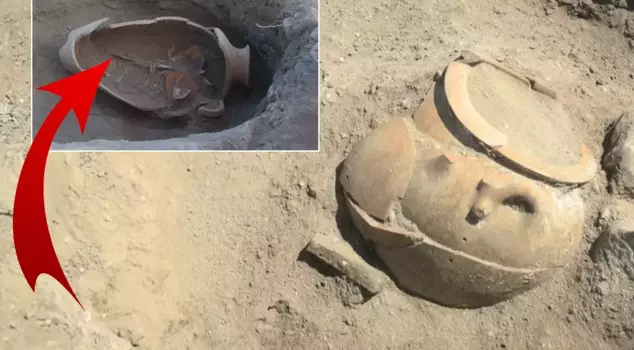
During the excavation at Oluz Höyük in Amasya, traces of the Phoenicians, who spread from the Eastern Mediterranean to all Mediterranean coasts in ancient times, were discovered. The excavation director, Prof. Dr. Şevket Dönmez, explained that they found human-headed glass beads and Phoenician-style baby graves that originated from the famous city-state of Carthage. He stated, "There are baby and fetus graves, numbering up to eight, placed inside jars, which are not found anywhere else in Anatolia. Perhaps we can talk about a culture in which children were sacrificed."
While 19 years have passed since the Oluz Höyük excavation, Prof. Dr. Dönmez from the Department of Archaeology at Istanbul University explained that the Oluz Höyük, which they have identified 10 layers, is like a page of a book dating back 6,500 years, stating that they have found palace and temple architectural remains from the Persian, Phrygian, and Hittite periods.
"NOWHERE IN ANATOLIA"
Pointing out that they have reached very important connections in the discovered Kubaba sacred area, Prof. Dr. Dönmez said, "When we look at the plan schema of the temple we discovered, it shows us the plan of an Aramaic, Phoenician temple, revealing a long, megaroid plan. The Phoenicians were an ancient community of Semitic origin that lived in the Eastern Mediterranean. The fact that they reached as far as Central Anatolia really surprises us. There are human-headed glass beads that came from Carthage. There are Phoenician-type graves. The most interesting are the baby graves. There are baby and fetus graves, numbering up to 8, placed inside jars, which we do not see anywhere else in Anatolia. They were buried positioned with a distance between them," he said.
"WE CAN TALK ABOUT A CULTURE WHERE CHILDREN WERE SACRIFICED"
In the initial evaluations regarding the graves, Şevket Dönmez conveyed that they think the babies were sacrificed in the Phoenician tradition or buried this way even if they were stillborn, stating, "Perhaps we can talk about a culture where children were sacrificed. We may have encountered the graves of sacrificed children, known as 'Tofed,' which were very common in the Phoenician world, in Anatolia as well. The scientific confirmation of this can only be made through anthropological evaluations," he said.
NEARLY 3,000 ARTIFACTS DELIVERED
Dönmez added that they have delivered nearly 3,000 artifacts unearthed during the ongoing excavations within the framework of the Future Heritage Project implemented by the Ministry of Culture and Tourism to the Amasya Museum.