11.04.2026 23:30
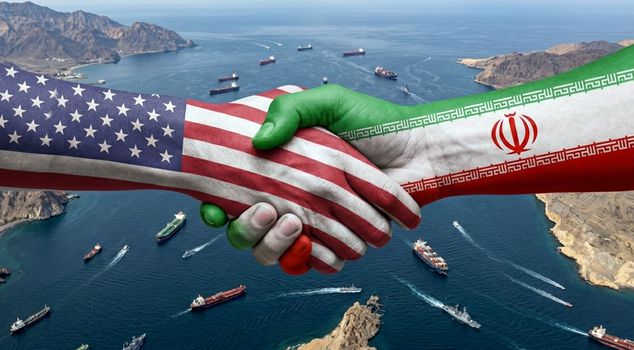
Negotiations between the United States and Iran, which resumed after a break in Islamabad, Pakistan's capital, are back on the table. In the face-to-face talks, the "Strait of Hormuz" crisis remains the biggest question mark.
The US-Iran negotiations mediated by Pakistan have resumed.
IRAN AND THE US AT THE TABLE AGAIN
The US and Iranian delegations, which came together in Islamabad, the capital of Pakistan, have resumed negotiations after a break. In the talks conducted under the mediation of the Pakistani government, the parties are seeking a lasting compromise that will reduce tensions in the region. However, the biggest obstacle at the negotiation table continues to be the disagreements over transit rights and security control in the Strait of Hormuz, which is considered the heart of global energy shipments.
THE BIGGEST CRISIS "STRAIT OF HORMUZ"
While the Iranian side insists on the recognition of control rights over the strait, the US administration emphasizes that there will be no concessions on international navigation freedom. In addition to this crisis, which will determine the course of the negotiations, critical issues such as the nuclear program and economic sanctions are also being evaluated by technical teams. Experts state that these contacts in Islamabad could initiate a new era in the Middle East, but the uncertainty regarding the Strait of Hormuz could block the process at any moment.
"THE US HAS EXCESSIVE DEMANDS"
According to a report by Tasnim News Agency, the Iranian negotiating team stated that the US has excessive demands. Iranian officials indicated that they would not give up on protecting military gains. Meanwhile, the parties have begun exchanging written texts on key issues.
PEZEŞKİYAN'S STATEMENT: THE IRANIAN DELEGATION IS PROTECTING THE INTERESTS OF ITS PEOPLE
Iranian President Pezeşkiyan stated, "The high-level Iranian delegation in Pakistan is fully committed to protecting Iran's interests and will negotiate courageously in this direction. In any case, our service to our people will not stop for a moment, and regardless of the outcome of the negotiations, the government will stand by its people."
IRAN: WE HAVE SUBMITTED A 10-POINT PROPOSAL
Iran's Foreign Ministry Spokesperson Ismail Bekayi stated regarding the contacts with Pakistani officials, "Speaker of the Parliament Mohammad Baqir Qalibaf and Foreign Minister Abbas Araghchi had meetings with Pakistani officials lasting about 2-2.5 hours, and the discussions are still ongoing. Iran's assessments, views, and demands have been conveyed to the Pakistani side within the framework of a 10-point proposal package."
VANCE LEADS THE US DELEGATION
In today's meetings, the US side is represented by a delegation led by Vice President JD Vance. The delegation includes White House Special Representative Steve Witkoff and Trump's son-in-law Jared Kushner. The Iranian side is led by Speaker of the Parliament Mohammad Baqir Qalibaf. Foreign Minister Abbas Araghchi, Secretary General of the Defense Council Ali Akbar Ahmadian, the Governor of the Central Bank of Iran, and some members of parliament are also participating in the discussions.
##19739528##
DELEGATIONS MET WITH SHAHBAZ SHARIF
Both delegations separately met with Pakistani Prime Minister Shahbaz Sharif before the official meeting. Sharif first met with the Iranian negotiating delegation. Immediately after, Vice President JD Vance, leading the US delegation, met with Shahbaz Sharif.
##19739645##
IRAN'S RED LINES
According to Iranian state television, the Tehran administration's "red lines" were communicated to the Prime Minister of Pakistan. Accordingly, among Iran's priorities are control over the Strait of Hormuz, payment of war reparations, release of frozen Iranian assets, and a comprehensive ceasefire across the region.
TEMPORARY CEASEFIRE BETWEEN THE US AND IRAN INCLUDING ISRAEL
Following the attacks initiated by the US and Israel against Iran on February 28, and Iran's retaliatory attacks on some regional countries, which escalated into war, US President Donald Trump announced on April 8 at around 01:30 that he accepted the ceasefire.
Trump stated that they accepted a two-week ceasefire on the condition of the opening of the Strait of Hormuz, that they received a 10-point proposal from Iran, and that this was a viable basis for negotiations.
The Iranian National Security High Council, which stated that "Iran has achieved its objectives in the war," also reported that the final negotiations are aimed to be concluded in Islamabad within a maximum of 15 days.
Turkey, Pakistan, and Egypt have made intense efforts for the continuation and conclusion of the message exchange between the US and Iran.
The Israeli administration, which announced its support for the temporary ceasefire, continues its attacks on Lebanon, arguing that the issue of Lebanon is not included in the agreement.