17.03.2026 14:51
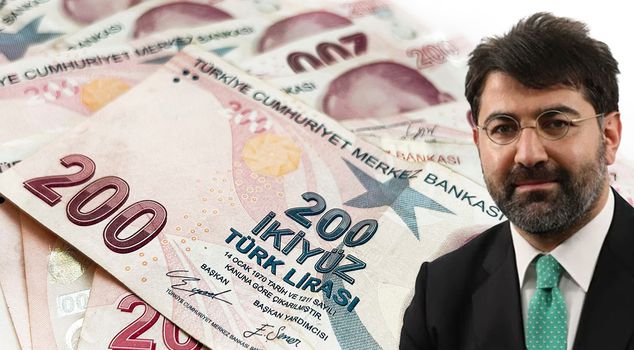
The Central Bank had filed a criminal complaint with the prosecutor's office due to the suspicion of a crime found in the inspection report prepared as a result of the audit conducted at the Interbank Card Center. In the prepared indictment, former Deputy Governor of the Central Bank, Emrah Şener, whose signature is on the circulating 200 TL banknotes, was described as the leader of the organization. It was requested that 9 individuals be sentenced to imprisonment ranging from 14 years to 57 years.
Following the criminal complaint filed by the Central Bank of the Republic of Turkey (CBRT), an indictment was prepared against 9 suspects, including former Deputy Governor Emrah Şener and former General Manager of the Interbank Card Center (BKM) Baran Aytaş, as part of the investigation initiated.
The investigation conducted by the Istanbul Chief Public Prosecutor's Office regarding the allegations of irregularities in the tenders held in 2023 at BKM, where CBRT is the main shareholder, has been completed.
In the prepared indictment, Interbank Card Center Inc. is referred to as the "victim," CBRT as the "complainant," former Deputy Governor Emrah Şener as the "organization leader," and former BKM General Manager Baran Aytaş as the "organization manager."
The indictment stated that the criminal organization led by former Deputy Governor Emrah Şener caused the transfer of BKM resources to third parties by unlawfully awarding tenders and procuring services to individuals they knew from previous periods.
ALLEGATION THAT "HE ENSURED BKM'S DOWNFALL"
The indictment noted that many of the suspects in the case had a common link to Emrah Şener, mentioning that Baran Aytaş was a master's student of Şener and that Şener employed Aytaş as a consultant at the Central Bank between 2017 and 2020. It was recorded in the indictment that Şener facilitated and directed Aytaş's appointment as Deputy General Manager and General Manager at BKM in 2020 and thereafter.
The indictment emphasized that Şener ensured BKM's procurement of services without a tender from the Technology Transfer Office (TTO) of Boğaziçi University and that Enarge received the tenders for "Chip Plastic Card Procurement" and "Specification and Applet Software Development for Troy." It also highlighted that he had Bora Koç, a member of the organization who was also a student at the university, hired as a consultant at CBRT in 2018, and after serving there for four years, he was appointed as Deputy General Manager at BKM.
SHELL COMPANY IN SINGAPORE
The indictment reported that Emrah Şener employed witness C. U., who was the Chief Information Officer at the Bank, on "Digital Identity" and "Tokenization" topics, and that he tried to keep C. U. from contacting anyone regarding this matter. It was stated that Şener forwarded documents obtained from C. U. to Muhammed Güven, a former BKM employee and member of the organization, who established a shell company in Singapore before the procurement of services, and that Boğaziçi TTO was made to issue invoices as if services were procured from this company.
The indictment assessed that the individuals appointed to the upper management of BKM under Şener's guidance had money transfers between each other under names such as debt, donation, and similar terms in their bank account movements, and that these transactions were sent to Muhammed Güven by Aytaş.
It was reported in the indictment that half of the payments made to individuals assigned abroad by BKM were sent to Güven's account by these individuals, and that Baran Aytaş stated multiple times in his testimony to the police and the prosecutor's office that he was placed in CBRT and BKM by Şener, and that the tender processes and the firms invited to the tender were directed by Şener.
The indictment noted that Aytaş stated in his testimony that the instruction to pay the tender amounts the next day was given by Emrah Şener, that many instructions regarding tenders and procurements were given by Şener, that he generally communicated with Şener, that the other suspects were in the background, and that Güven was sent to Singapore on Şener's orders, where he established a shell company named EM Smarttechs, and that the instruction to collaborate with Boğaziçi TTO was also given by Şener.
Aytaş mentioned that Şener took the corporate credit card belonging to BKM by threatening to fire him and that the names of the students who would receive meal cards were also provided by Şener, as stated in the indictment.
Suspect Bora Koç also stated in his testimony that BKM operated under Şener's instructions, that part of his salary was taken by Şener, and that he was wary of Şener because those who dealt with him had their professional lives ended.
THEY ISSUED INVOICES TO BKM
According to the forensic report obtained regarding the suspects' mobile phones, the indictment stated that Şener was in constant contact with Aytaş, Koç, and Güven, and that messaging records were found particularly with Muhammed Güven, who was described as the organization's treasurer, via WhatsApp and Signal.
The indictment stated that "to complicate the trace of the benefits obtained, they acted within a certain confidentiality principle by establishing a shell company abroad, arranging invoices as if services were procured, and bringing the assets obtained from the crime back into the country. It was concluded that the suspects communicated via a private application called Signal, that Baran Aytaş established control over the actions as the General Manager of BKM under the instructions and guidance of Emrah Şener, and that the other suspects participated in some of the actions and were members of the organization."
177 MILLION TL IN 6 TENDERS
The six actions subject to the investigation were listed in the indictment as "Chip Plastic Card Procurement Tender, Specification and Applet Software Development Tender for Troy, Service Procurements from Boğaziçi University TTO, Service Procurements from Be Bold Advertising Design Software Trade Limited Company, Payments Made with Meal Cards, Use of Corporate Credit Cards."
The indictment stated that the total amounts of the tenders and contracts for these actions were 177 million 192 thousand 538 lira, and that a tender for the procurement of 2.5 million chip plastic cards was held on May 22, 2023, at the request of the BKM Product Management Department, with the administrative "Specification, Framework Agreement, Scope Document, and Proposal Letter" prepared, and that on May 17 of the same year, these documents were sent to three companies, including Enarge.
It was stated in the indictment that on the date the tender was held, only Enarge submitted a bid, and that the tender was awarded to Enarge for a final amount of 3 million 235 thousand dollars, with the Purchasing Commission Decision indicating an agreement at the exchange rate of 19.867 at that time for 64 million 269 thousand 745 lira, and that irregularities and legal violations were identified in the examination report of the Central Bank and the expert report obtained.
The indictment listed these irregularities and violations as follows:
- The procurement of the goods subject to the tender did not fall under the scope of Article 3(g) titled 'Exceptions' of the Public Procurement Law No. 4734, no approximate cost calculation was made for the procurement of the goods subject to the tender, the commitments and delivery times in the administrative specification and scope document contained conditions that made it difficult to submit price offers, the winning bidder did not possess the necessary documents to participate in the tender and was aware of the tender in advance, the criteria that the documents requested to participate in the tender must meet were not specified in the administrative specification, the payment to the winning firm was made before the delivery of the cards and the issuance of the invoice, and it was determined that BKM's financial assets were used to procure chip cards for a commercial bank.
In the indictment, it was stated that for the Troy project, a price offer was received from a single bidder for the Specification and Applet Software Development tender, that unrelated commitments which could lead to an increase in work were included in the scope document, that the entire tender amount was paid before the completion of the tendered work, and that the work was not delivered within the promised timeframe in the scope document.
It was noted in the indictment that this tender is part of the Chip Plastic Card Procurement Tender, and that it should be conducted as a single tender in connection with each other, and it was recorded that chip plastic cards could not be practically used by banks without the specification and applet software.
In the indictment, it was confirmed by an expert report that the current situation clearly indicates that if both tenders were conducted as a single tender, the exceptional limit specified in the law (66 million 224 thousand 498 lira) would be exceeded, and it was stated that by conducting two separate tenders, the tender amounts were intentionally kept below the exceptional limit specified in the law, which is contrary to Law No. 4734.
While at least three bidders should have been invited to submit offers for the procurement of the tendered service, it was stated in the indictment that a price offer was received from a single bidder and no valid reason was presented for not obtaining a price offer from another company, thus preventing potential bidders from participating in the tender as no other company was invited besides Enarge.
In the indictment, it was explained that the scope document prepared for the tendered work was made an annex to the chip card supply contract won by Enarge in the first tender, and that a separate administrative specification and contract were not prepared for the tendered work, and since no administrative specification was prepared for the tender, the economic and financial adequacy and professional and technical qualifications that should be requested according to the tender legislation and BKM Procurement Regulation were not requested from Enarge, and that the criteria that the documents should meet and the definition of similar works that would be accepted as work experience were not specified, leading to the tender being awarded to this company, which had no experience related to the tendered work, thus corrupting the tender process.
It was emphasized in the indictment that the entire tender amount was paid before the completion of the tendered work contrary to the scope document, and that the work was not delivered within the promised timeframe, causing BKM to incur losses, and that benefits were provided to the winning company, thus corrupting the performance of the obligation.
In the indictment regarding the two tenders, it was evaluated that "BKM resources were transferred to front companies through the winning bidder Enarge, and that the crime of 'embezzlement' as defined in Law No. 6493 on Payment and Securities Settlement Systems, Payment Services and Electronic Money Institutions was committed, and that the proceeds of the crime were laundered by falsifying documents and transferring them abroad."
In the indictment, regarding the financial examination of the services procured from Boğaziçi TTO, it was stated that BKM resources were transferred to TTO through fraudulent actions, committing the crime of 'embezzlement', and that the proceeds of the crime were laundered by falsifying documents and transferring them abroad.
HE WAS RELEASED IN NOVEMBER
In the indictment, it was requested that 9 suspects, including Emrah Şener, Baran Aytaş, Bora Koç, Muhammed Güven, and İbrahim Şener, be sentenced to imprisonment for periods ranging from 14 years to 57 years for the crimes of "establishing an organization for the purpose of committing a crime," "being a member of an organization established for the purpose of committing a crime," "corrupting the tender of public institutions or organizations," "corrupting the performance of an obligation," "violating Law No. 6493," "qualified fraud," and "forgery in a private document."
The prepared indictment was sent to the Istanbul Heavy Penal Court for evaluation.
A house arrest decision had been made for Şener in November of last year.