26.02.2026 08:41
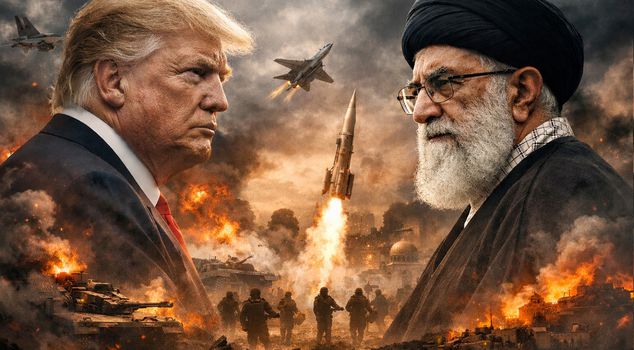
Following the increase in U.S. military activity in the Middle East for a possible military operation against Iran and the rising tensions in the region, it has been suggested that Donald Trump's advisors viewed an initial attack by Israel as politically less risky and considered this option.
While the nuclear negotiations between the US and Iran remain fresh in the agenda, a striking claim has emerged from the US-based news site Politico.
According to a report based on two government sources who wished to remain anonymous, it was stated that advisors to US President Donald Trump are in favor of Israel making the first strike against Iran. It was reported that an Israeli attack that would provoke Iran into retaliation is seen as logical and would help generate public support in the US for a potential American military operation. One source noted that "there is a prevailing belief within and around the administration that it would be politically much better for Israel to act alone first, and for Iran to retaliate, giving us more reason to act."
"TRUMP WILL DEFINITELY ATTACK IRAN"
The report indicated that both sources see a joint US-Israel operation against Iran as possible, and it was expressed that those closest to Trump view an attack on Iran as a certainty.
RETALIATION RISK IS NOT IGNORED
Sources emphasized that the scope of a potential operation is uncertain and that potential risks are being considered, pointing out that the US using a large portion of its military capacity for an attack on Iran could embolden China regarding the invasion of Taiwan. One of the sources stated, "If we are talking about an attack aimed at regime change, it is very likely that Iran will retaliate with everything it has. We have numerous assets in the region, and each of them is a potential target. Moreover, they are not under 'Iron Dome' protection. Therefore, the likelihood of American casualties is high. And this carries a lot of political risk."
"ONLY TRUMP KNOWS WHAT HE WILL DO"
White House spokesperson Anna Kelly, in response to a request for comments on the matter, stated, "While the media continues to speculate about the president's thoughts, only President Trump knows what he will and will not do." The Israeli Embassy in Washington refrained from commenting on the issue.
US-IRAN NEGOTIATION PROCESS
The nuclear negotiations between Iran and the US, which were interrupted by attacks on Iran by Israel and the US in June 2025, were revitalized through the initiatives of regional countries, especially Turkey, and the mediation of Oman.
While the US's threats of attack and massive military buildup continue, the parties came together for indirect negotiations in Oman on February 6 and agreed to continue the contacts. Subsequently, the second round of talks continued in Geneva on February 17. The parties reported progress in the negotiations and later agreed to meet again in Geneva on February 26.
Iran is demanding the lifting of sanctions in exchange for continuing its nuclear program within the framework of limitations that would prevent the production of atomic bombs. The US, on the other hand, wants Tehran to completely halt its uranium enrichment activities and to export its stock of highly enriched uranium out of the country.
The negotiations address the level to which the enrichment rate will be limited, the status of the approximately 440 kilograms of uranium enriched to 60% level, and the timeline for lifting sanctions and verification mechanisms.