07.02.2026 07:30
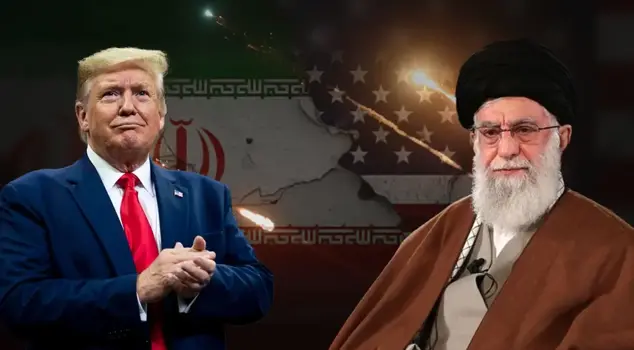
U.S. President Donald Trump described the indirect talks between Iran and Oman, held in the capital Muscat, as "very good" and stated that Iran has strongly shown its willingness to make a new deal. Just hours before this statement, Trump signed a decree allowing for additional tariffs to be imposed on countries doing business with Iran.
Trump answered journalists' questions on the presidential plane while traveling from Washington to Florida.
Expressing his satisfaction with the initial meetings in Muscat, Trump said, "Today we had very, very good discussions with Russia and Ukraine, and we also had very good discussions with Iran. It seems that Iran wants to make a deal and they really want it."
"THE NAVY WILL BE IN IRAN SOON"
Recalling that a large naval force has been sent to the region against Iran, Trump stated, "It will be there soon. We will see how this turns out."
"WE ARE HAVING GOOD DISCUSSIONS WITH IRAN"
Emphasizing that the U.S. will take the necessary steps but that there is no need to rush, Trump said, "If you remember Venezuela, we waited for a while, and we are in no hurry. We have plenty of time. We are having very good discussions with Iran."
THREATENED IRAN AGAIN
Trump described the meeting between the U.S. negotiation team, consisting of his special representative Steve Witkoff and son-in-law Jared Kushner, and Iranian Foreign Minister Abbas Araghchi as discussions conducted among "high representatives," stating, "It is clear that if there is no deal, the consequences will be very severe. Accordingly, everyone knows their cards."
Trump expressed that he very much wants to see an agreement reached with Iran under acceptable conditions, saying, "But above all, there will be no nuclear weapons."
A NEW MEETING WILL BE HELD NEXT WEEK
In the early months of his second presidential term, Trump claimed that if the Tehran administration had approached the currently negotiated conditions positively as they do now, "there would have already been an agreement between the two countries," stating, "Right now, they are much more willing for a deal than before."
Emphasizing the need to see the results of the discussions, Trump noted that the parties plan to meet again next week.
THE TWO COUNTRIES MET IN OMAN
It was reported that the meetings in Muscat, mediated by Oman, were a good start, that the parties decided to continue negotiations, and that they expressed a joint intention for a new round of talks.
AFTER THE MEETING, A BLOW TO IRAN
On the other hand, U.S. President Donald Trump signed a presidential decree allowing additional tariffs to be applied to products from countries that directly or indirectly obtain goods or services from Iran.
The decree shared by the White House stated that the actions of the Iranian government continue to pose an "unusual and extraordinary threat" to U.S. national security, foreign policy, and economy.
According to the decree, additional tariffs, for example at a rate of 25%, may be applied to products imported by the U.S. from countries that obtain goods or services from Iran, either directly or indirectly.
The U.S. Department of Commerce will identify countries that obtain goods or services from Iran in consultation with the Department of State.
Following this identification, the President will be advised on whether to impose tariffs on the products of those countries and, if so, at what rate.
The President may modify the decree based on responses or additional information from Iran or other countries.
The Departments of State and Commerce will also monitor trade relations with Iran and relevant countries and will propose additional measures when necessary.
The decree will come into effect on February 7, 2026.
WHAT HAPPENED?
With the protests that erupted in Iran in January, tensions between the U.S. and Iran escalated, and Trump had signaled that he could use military force to support the protesters.
After the Tehran administration halted the death sentences against the protesters, Trump announced that he was temporarily suspending the military option, allowing diplomacy to come back into play to resolve the long-standing dispute involving nuclear programs and regional security concerns.
It was announced that a meeting would first take place in Istanbul at Turkey's suggestion between the two countries, but the meeting location was later moved to Muscat at Iran's request.