14.02.2026 14:10
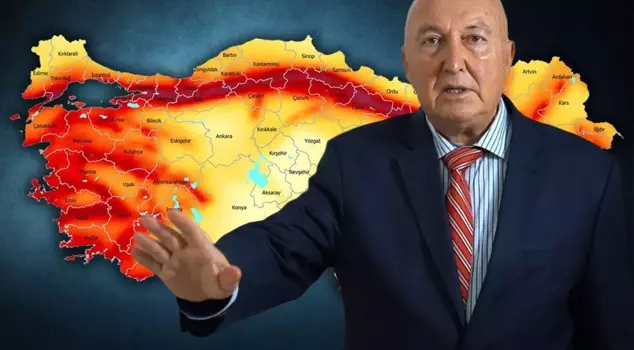
Geophysics Engineer Prof. Dr. Özgün Ahmet Ercan listed the countries in Europe with low earthquake risk. Ercan pointed out the Black Sea coastal region, as well as Mardin, Batman, Siirt, and Alanya, as areas with low earthquake risk in Turkey.
Geophysical Engineer Prof. Dr. Özgün Ahmet Ercan listed countries in Europe that have no earthquakes or a very low risk of tremors in his assessment of earthquake risk.
"IF YOU WANT TO LIVE IN A COUNTRY WITHOUT EARTHQUAKES, GO HERE"
Ercan stated, "If you want to live in a country without earthquakes in Europe, the countries you should go to are" and listed Finland, Sweden, Norway, Denmark, Ireland, the Netherlands, Belgium, Lithuania, Latvia, Estonia, Germany, Belarus, Poland, and Ukraine.
Ercan expressed that most of these countries are located far from active fault lines and that seismic activity is limited.
AREAS WITH LOW EARTHQUAKE RISK IN TURKEY
Prof. Dr. Özgün Ahmet Ercan also provided an assessment for those living in Turkey. Ercan said, "If you are going to stay in Turkey, the entire Black Sea coastal region, Mardin, Batman, Siirt, Alanya."
Highlighting that a significant portion of Turkey is located on active fault lines, Ercan's statements brought the discussions on earthquake safety back to the forefront.
FEAR OF EARTHQUAKES IS HIGH BUT PREPARATIONS ARE INSUFFICIENT
The "Awareness of Living Under Earthquake Risk" research by Turkey İMSAD revealed that a large portion of society in Turkey is aware of and concerned about earthquake risk, but individual and structural preparations are insufficient. While 66% of the country's land and 71% of the population live in medium and high-risk areas, 58.3% of participants expressed concern about earthquakes, 40.6% expect a destructive earthquake within the next five years, yet 45.5% stated they do not feel prepared. The DASK rate remains at 41.6%, while 7 out of 10 people do not have an earthquake bag, more than half do not know the gathering area, and many structures have not undergone risk assessment, indicating that widespread fear has not translated into adequate prevention.