11.03.2026 12:42
As the attacks by the US and Israel on Iran continue, new steps from Iran towards the Strait of Hormuz keep coming. Iran has closed the Strait to all ships connected to the US and Israel. Following these events, Minister of Transport and Infrastructure Abdulkadir Uraloğlu stated, "15 Turkish-owned ships are waiting in the Strait of Hormuz. They have no issues."
The war that erupted in the Middle East following the attack initiated by the US and Israel continues on its 12th day. After the war, Iran closed the Strait of Hormuz, while Minister of Transport and Infrastructure Abdulkadir Uraloğlu made statements to journalists before the AK Party's parliamentary group meeting.
Uraloğlu drew attention to the serious risks in air traffic as the duration of the war extends, emphasizing that the process needs to be managed. He noted that the airspaces of Syria, Iraq, Iran, and Israel are closed, and that other regional countries have also implemented daily or regional restrictions from time to time, sharing the following information regarding evacuation and transportation efforts:
"With all our efforts, we have agreed with the relevant countries for additional flights for Turkish citizens and foreign nationals to travel from Oman and Saudi Arabia to the region by land, and from Istanbul to the world. The flights are ongoing, and I can say that there is currently no significant disruption."
"NO ISSUES IN LAND CROSSINGS"
Minister Uraloğlu stated that there have been no disruptions in land transportation along the Iran, Syria, and Iraq routes and that crossings are continuing. He also addressed the situation of Turkish planes remaining in Iran. Uraloğlu said, "There are Pegasus and Turkish Airlines planes remaining in Iran. We have brought the crews of two planes. There is no problem; depending on the course of the war, the retrieval of the planes will also be considered. We are closely monitoring the process," he said.
CONTACT WITH THE CREW OF 15 SHIPS IN THE STRAIT OF HORMUZ CONTINUES
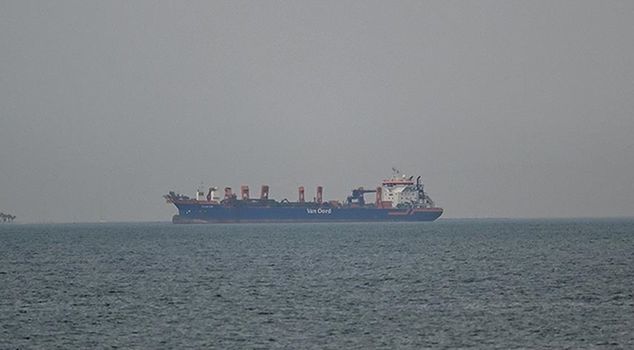
Providing information about maritime traffic in the Strait of Hormuz, Uraloğlu reported that there are 15 Turkish-owned ships. He emphasized that they are in constant contact with all the crews and personnel of the ships, stating:
"They are currently in a waiting position. They have a grievance solely due to being there; apart from that, there is no issue in meeting their needs. We are closely monitoring. If the Strait of Hormuz eases, we hope to get them out of there as well."
In response to a question about whether there have been any attacks or damages to the ships in the region, Uraloğlu replied, "Not at the moment. None of our citizens or our ships and planes are affected."
THE HORMUZ CRISIS TRIGGERS THE LARGEST SUPPLY SHOCK
Maritime traffic in the Strait of Hormuz, one of the most critical transit points for global oil trade, has come to a standstill following the joint attacks initiated by the US and Israel against Iran and Tehran's retaliations. Insurance companies have canceled war policies for ships in the region, while leading container and tanker companies have suspended transits through the Strait.
According to data from the UK Chamber of Shipping, historically, an average of 138 commercial ships passed through the Strait daily. However, following the attacks by the Iranian Revolutionary Guard Corps, particularly targeting commercial ships linked to the US and Israel, a significant decline in ship transits has been observed.
The Strait of Hormuz, located at the exit of the Persian Gulf, connects Middle Eastern oil production to global markets via the Arabian Sea and the Indian Ocean. According to information compiled by an AA reporter, an average of 15 million barrels of crude oil and 5 million barrels of petroleum products were shipped through the Strait daily last year. This indicates that the total volume passing through Hormuz reached approximately 20 million barrels per day.
If the current crisis disrupting the oil flow through the Strait continues, it is estimated that the supply, which constitutes about 20% of global oil demand, will be effectively impacted. It is assessed that such a magnitude of disruption could surpass all supply shocks seen in modern oil markets to date.
PAST CRISES REVEAL THE DIMENSIONS OF RISK
Past major oil crises make the current situation even more striking. It is noted that during the oil embargo in 1973, approximately 4.3 million barrels of oil were withdrawn from the global market daily, which corresponded to about 7.4% of the demand at that time.
During the 1978-1979 Iranian Revolution, a daily supply loss of approximately 5.6 million barrels occurred, which corresponded to about 8.6% of global demand. The Iran-Iraq War in 1980 is estimated to have caused a daily supply loss of approximately 4.1 million barrels, affecting about 6.8% of global demand. In the Iraq-Kuwait War that began in 1990, the daily supply loss was approximately 4.3 million barrels, which corresponded to about 6.5% of the global demand at that time.
Looking further back, during the Suez Crisis in 1956, approximately 2 million barrels of oil supply were rendered unavailable daily, which corresponded to about 11.4% of the global demand at that time. However, in absolute volume terms, this loss is seen to be significantly lower than the potential disruptions that could arise today in the Strait of Hormuz.
Compared to past crises, the current risk in the Strait of Hormuz indicates the largest supply shock ever seen in oil markets, both in terms of the ratio to global demand and absolute volume.