12.04.2026 19:22
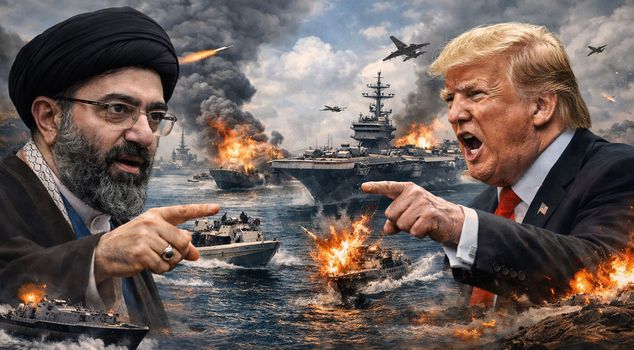
U.S. President Donald Trump threatened, stating, "We will begin the process of blockading the Strait of Hormuz. We will start destroying the mines that the Iranians have laid in the strait. Any Iranian that fires upon us or peaceful ships will be sent to hell." In response, the Iranian side reacted. The Commander of the Islamic Revolutionary Guard Corps Navy stated, "Any wrong move will trap the enemy in a deadly whirlpool in the Strait of Hormuz."
No results came from the critical negotiations lasting 21 hours between the US and Iran in Islamabad, the capital of Pakistan. While the parties announced that the talks ended without reaching an agreement, a new threat came from US President Donald Trump towards Iran.
Trump stated that the US Navy would begin the process of blockading the Strait of Hormuz, saying, “We will reach a foundation where everyone is allowed to enter and everyone is allowed to exit. We will also start to destroy the mines that the Iranians have laid in the strait. Any Iranian who fires at us or peaceful ships will be sent to hell.”
FIRST RESPONSE FROM IRAN TO TRUMP'S THREAT: ANY WRONG MOVE WILL TRAP THE ENEMY IN A DEADLY WHIRLPOOL IN THE STRAIT OF HORMUZ
The first response from Iran to Trump's threat came from the Islamic Revolutionary Guard Corps. The social media account of the Naval Forces Command of the Revolutionary Guard shared images related to the Strait of Hormuz. The shared images showed an unmanned aerial vehicle (UAV) conducting surveillance over the Strait of Hormuz. In the statement released with the images, it was stated, "All traffic is under the control of the armed forces. Any wrong move will trap the enemy in a deadly whirlpool in the Strait of Hormuz."
NO RESULTS FROM 21 HOURS OF TALKS
No results came from the critical negotiations lasting 21 hours between the US and Iran in Islamabad, the capital of Pakistan. The US side presented a proposal that included the complete termination of Iran's nuclear program. Tehran rejected this demand and put its own proposal on the table. The negotiations stalled as neither side took a step back. US Vice President J.D. Vance summarized the reason for the deadlock, saying, “We clearly laid out our red lines, but Iran preferred not to accept these conditions.”
MILITARY PRESSURE YIELDED NO RESULTS
Following the inconclusive talks in Geneva in February, the extensive attacks launched by the US against Iran also did not yield the expected results. According to Pentagon data, despite operations lasting 38 days that targeted more than 13,000 sites, Iran did not back down. The Tehran administration clearly stated that military pressure would not change its decisions.
MESSAGE OF DETERMINATION FROM IRAN
The Iranian Ministry of Foreign Affairs emphasized in a statement after the talks that the country would not back down regarding its nuclear program. The statement said, “Our determination to defend the interests and rights of our nation has strengthened even further.” Iran rejected demands for the complete termination of nuclear activities, considering them within the scope of its sovereign rights.
THE STRAIT OF HORMUZ IS AT THE CENTER OF THE CRISIS
One of the most critical topics of the negotiations was the Strait of Hormuz. While Iran made the control and security of the strait a priority agenda item, no consensus was reached with the US on this issue as well. Experts believe that a potential conflict could deeply shake global energy markets. Previous crises in the Strait of Hormuz had led to significant economic fluctuations worldwide due to disruptions in approximately 20% of oil supply.
TWO OPTIONS ON THE TABLE: LONG NEGOTIATIONS OR WAR
According to an analysis by The New York Times, the US administration will either enter into a new negotiation process with Iran that could last for years or take the risk of a large-scale conflict that includes control of the Strait of Hormuz. Maintaining the current positions of the parties weakens the likelihood of a new consensus in the short term, indicating that tensions in the region will continue.