10.03.2026 01:40
Following the attacks by the US and Israel, Iran, which effectively closed the Strait of Hormuz to crossings and ignited a global energy crisis, has made a new statement. The Revolutionary Guard Corps announced that Arab or European countries that expel Israeli and US ambassadors from their territories could pass through the Strait of Hormuz.
While the attacks by the US and Israel on Iran continue, a striking statement regarding the Strait of Hormuz has come from the Iranian Revolutionary Guard Corps.
"COUNTRIES THAT EXPEL ISRAELI AND US AMBASSADORS MAY PASS"
In a written statement published by the Iranian Students News Agency (ISNA), it was stated, "Any Arab or European country that expels Israeli and US ambassadors from its territory will have full authority and freedom to pass through the Strait of Hormuz."
DIFFERENT "HORMUZ" STATEMENTS FROM IRAN
Brigadier General Ibrahim Jabbari, advisor to the Commander of the Iranian Revolutionary Guard Corps, announced on March 3 that they had closed the Strait of Hormuz to crossings and would attack ships attempting to pass through.
Deputy Commander of the Hatemul Enbiya Construction Headquarters of the Iranian Revolutionary Guard Corps, Kiyomers Heydari, claimed in a statement on March 5 that they had not closed the Strait of Hormuz, asserting that ships complying with international protocols continued their voyages.
THE IMPORTANCE OF THE STRAIT OF HORMUZ
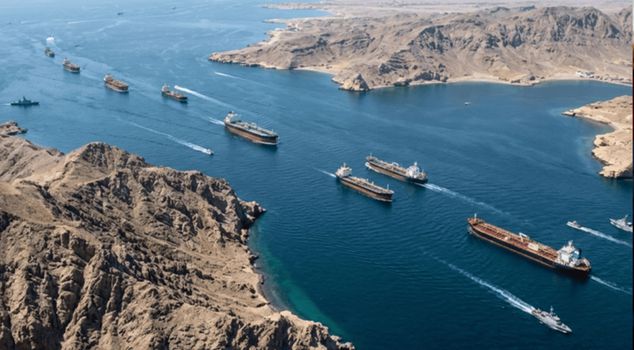
The Strait of Hormuz is considered the most critical and sensitive "jugular vein" of global energy security. Approximately one-third of the world's oil transported by sea and a significant portion of liquefied natural gas (LNG) pass through this narrow waterway. This strait, located between Oman and Iran, with its narrowest point being about 33 kilometers, serves as a challenging gateway connecting major oil producers in the Persian Gulf to the open seas.
During periods of escalating regional tensions, the mere possibility of closing the strait can trigger panic waves in global energy markets and cause prices to rise rapidly, making control and navigation security over Hormuz a geopolitical issue that directly affects not only the countries in the region but the entire world economy.