11.12.2025 21:56
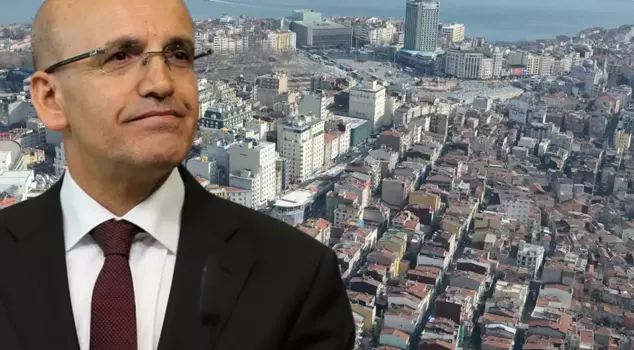
The Minister of Treasury and Finance, Mehmet Şimşek, provided a timeline regarding the increase in rental prices. Minister Şimşek stated, "There is a significant effort regarding housing and rental inflation. In the upcoming period, rental increases will normalize. With the increase in housing supply in the coming period, normalization in rental inflation will occur."
Speaking at the '5th Future of Finance Summit and Money Talks' program in Istanbul, Minister of Treasury and Finance Mehmet Şimşek stated, "We are entering a period that our citizens and the real sector will feel. This period is one where we talk about inflation dropping to single digits. We are referring to a period that encompasses the year 2027. A period where the current account deficit is reduced to 1% and below."
MEHMET ŞİMŞEK'S INFLATION REMARK
The '5th Future of Finance Summit and Money Talks' program began today with the opening speech of Vice President Cevdet Yılmaz at the Turkuvaz Media Center. In addition to Yılmaz, speeches were also delivered by Ahmet Burak Dağlıoğlu, President of the Presidential Investment and Finance Office, Prof. Dr. Şahap Kavcıoğlu, President of the Banking Regulation and Supervision Agency (BDDK), İbrahim Ömer Gönül, President of the Capital Markets Board (SPK), Korkmaz Ergun, General Manager of Borsa Istanbul, and Sinan Köksal, Group President of Brand and Marketing at Turkuvaz Media. Minister of Treasury and Finance Mehmet Şimşek attended the final session of the summit held this evening.
"NO CHANGE IN OUR PRIORITIES"
Speaking at the program, Minister of Treasury and Finance Mehmet Şimşek said, "We have a program that we are implementing. There is no change in our priorities. It can be expressed as reducing inflation to single digits and achieving a sustainable current balance. We have a 'structural transformation' headline to ensure that Turkey does not fall behind in the global competition. The ultimate goal of this entire program is to ensure sustainable high growth and a more equitable distribution of this growth. We thought of the program in three phases. The first phase was a control period. The second phase is the phase where imbalances are addressed. The third phase is achieving the targets. We are entering a period that our citizens and the real sector will feel. This period is one where we talk about inflation dropping to single digits. We are referring to a period that encompasses the year 2027. A period where the current account deficit is reduced to 1% and below. Therefore, the third phase is the most critical phase," he stated.
'RENT INCREASES WILL NORMALIZE IN THE COMING PERIOD'
Minister Şimşek stated, "There is a recovery in economic growth. Growth is around 5.5%. We have addressed the housing deficit in the earthquake zone. Currently, there is a mobilization of approximately 1.4 million housing units, including 500,000 social housing units that are planned and being implemented. God willing, it will be completed in the next two years. There is a significant effort regarding housing and rent inflation. Supply-side policies will gradually show their effects. We are in a position to support disinflation. If there are no additional shocks for next year, we see the upper part of the target band as achievable. The market expects inflation between 22-23%. The most significant factor keeping inflation above 30% is rent inflation. For a long time, we had a rent increase limit of 25%. In the coming period, rent increases will normalize. With the increase in housing supply in the coming period, normalization in rent inflation will occur," he expressed.
"WE SPENT 90 BILLION DOLLARS DUE TO THE EARTHQUAKE"
Minister Şimşek stated, "We are moving towards rule-based pricing in education. We have seen increases in private universities that are well above inflation. We will enter a downward trend in two areas: rent and education. Globally, commodity prices are affecting inflation. Predictions indicate that energy prices will decrease in 2026. Overall, there is a stable outlook for commodity prices. Therefore, we do not expect a significant inflation shock from abroad. As a result, we see the likelihood of inflation falling into the target range as quite high. We are reducing tax expenditures. We have eliminated some ineffective exemptions. We have significant reform headlines in the public sector. This year, the budget deficit will likely decrease to around 3%. The improvement in the budget is going better than we anticipated, and we will likely complete the year close to the target. As the budget deficit decreases, we will borrow less from the market and leave more resources for the private sector. In the last three years, we have spent 90 billion dollars due to the earthquake. We will have achieved the budget targets by 2025," he concluded.