22.03.2026 14:30
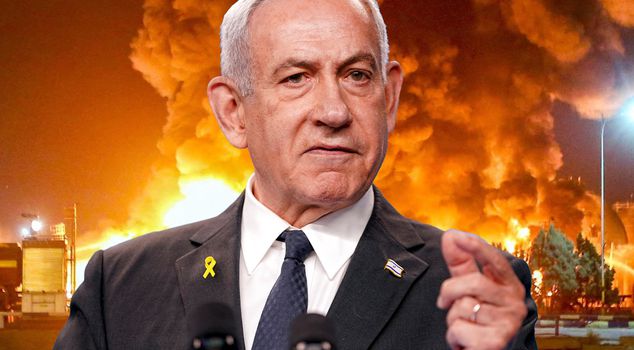
Israeli Prime Minister Netanyahu stated that other countries should be involved in the war against Iran, saying, "It is time to see other country leaders joining in; some have already begun to take steps in this direction." This statement has raised concerns that the already rising tensions in the Middle East could turn into a broader international conflict, strengthening assessments that the war could evolve into a multinational front, crossing regional boundaries.
Israeli Prime Minister Benjamin Netanyahu's statements aimed at increasing international participation in the war against Iran have raised concerns that the conflict in the Middle East could escalate into a broader war. Netanyahu's words, "It is time to see the leaders of other countries joining in," indicate that the current war may transcend regional boundaries.
WAR AT THE POINT OF TRANSCENDING REGIONAL BOUNDARIES
The large-scale military operations against Iran initiated by Israel and the U.S. at the end of February quickly turned into a multi-faceted crisis. Iran's missile attacks on Israel and its targeting of U.S.-UK bases revealed that the conflict is not limited to just two countries.
The Israeli army continues its attacks on military and nuclear targets in Iran, particularly in Tehran, while Hezbollah positions in Lebanon have also been targeted.
This situation makes Netanyahu's call for international support even more critical.
INTERNATIONAL COALITION SIGNALS STRENGTHENING
Netanyahu's statements align with the multinational support that has already begun to form on the ground. In recent days, more than 20 countries, including the UK, France, Germany, Japan, and Canada, have started to adopt a common stance against Iran's actions in the Strait of Hormuz.
While some countries are cautious about directly entering the war, they have stated that they are considering military or logistical support options under the justification of energy security and the protection of maritime trade.
On the other hand, many NATO countries are showing a tendency to avoid direct military intervention by saying, "this is not our war."
STRATEGIC STRAIT OF HORMUZ CRISIS AND GLOBAL IMPACT
One of the most critical issues in the conflict has been the Strait of Hormuz. Iran's restriction of this strategic transit route has directly affected global oil supply, leading to an energy crisis. The tensions in this route, through which approximately 20% of the world's oil passes, have caused prices to rise rapidly.
U.S. President Donald Trump's call to other countries to "secure this passage" has ignited discussions about sharing the burden of the war.
NETANYAHU'S STRATEGY UNDER DISCUSSION
Experts assess that Netanyahu's call for international participation has two main objectives: to share the military burden and to transform pressure on Iran into a global front.
However, some diplomatic circles warn that this approach carries the risk of escalating the war. Indeed, the statements of the Omani Foreign Minister, suggesting that Israel is dragging the U.S. into war, have deepened the international debate.
REGIONAL WAR RISK INCREASING
Netanyahu's statement that "some countries have started to move in this direction" strengthens the possibility of a multinational military bloc that is already taking shape. When combined with Iran's retaliatory threats, this significantly increases the risk of the conflict spreading throughout the Middle East.
According to experts, the current situation is progressing towards a scenario where "controlled war" boundaries are exceeded, and global powers may confront each other directly.