24.12.2025 00:15
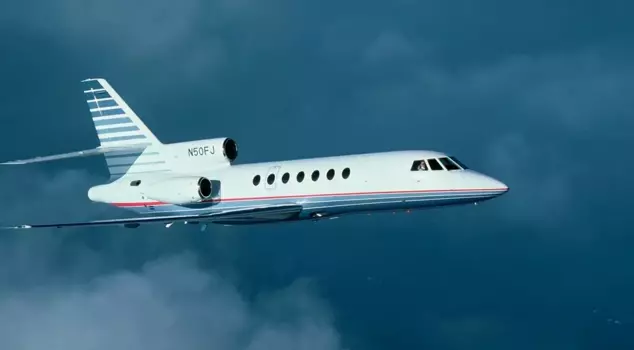
After the plane crash in Ankara, attention turned to the technical specifications of the fallen Dassault Falcon 50 jet. Produced by the French company Dassault Aviation and frequently preferred in the business world, the Falcon 50 stands out with its three-engine structure, long range, and high performance. Commonly referred to as a "flying tank" in the aviation community, the jet is notable for its sturdy fuselage and durability.
After the private jet crash in Haymana, which resulted in the deaths of five people including the Chief of General Staff of Libya, Muhammed Ali Al-Haddad, attention turned to the technical specifications of the Dassault Falcon 50 involved in the accident. Known in the aviation community as the "flying tank," this business jet stands out with its three-engine design, long range, and robust fuselage.
3 ENGINES PROVIDE HIGH ALTITUDE PERFORMANCE
The Falcon 50 is powered by three Garrett TFE731-3-1C turbofan engines. These three engines provide the aircraft with both extra safety and high altitude performance.
SPEED AND RANGE
Maximum Speed: 880 km/h
Cruise Speed: 797 km/h
Range: 6,480 kilometers (3,500 nautical miles) with full fuel
Altitude: Maximum 15,000 meters (49,000 feet)
Dimensions and Capacity
Length: 18.52 meters
Wingspan: 18.86 meters
Passenger Capacity: 9 passengers in VIP configuration (+2 pilots)
Engine: 3 Garrett TFE731 turbofans
Maximum Takeoff Weight: 18,500 kilograms
IN THE SKIES FOR 50 YEARS
First flown on November 7, 1976, the Falcon 50, produced by the French company Dassault Aviation, is preferred for long-range business flights and critical missions due to its transoceanic flight capability, three-engine safety, and robust structure. For these reasons, it is recognized in the aviation world as the "flying tank."