12.04.2026 19:43
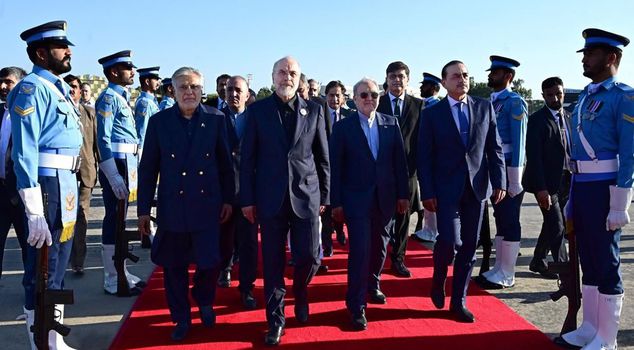
The Iranian delegation left Pakistan after 21 hours of negotiations with the United States. Iranian Parliament Speaker Mohammad Baqer Qalibaf stated at the airport regarding the negotiations, "The U.S. has understood our logic and principles. Now it's time to make a decision. Will it be able to earn our trust, or not?"
The first round of negotiations between Iran and the United States, hosted by Pakistan, ended yesterday.
IRANIAN DELEGATION LEFT PAKISTAN
After 21 hours of negotiations that yielded no results, the Iranian delegation left Pakistan. It is still unknown whether a second round will take place between the U.S. and Iran.
“THE U.S. UNDERSTOOD OUR LOGIC AND PRINCIPLES. IT'S TIME TO MAKE A DECISION”
Mohammad Baqer Qalibaf, the Speaker of the Iranian Parliament who led the Iranian delegation, stated at the airport regarding the negotiations, "Before the negotiations, I emphasized that we have goodwill and the necessary will, but due to the experiences of the previous two wars, we have no trust in the other side. My colleagues in the Iranian delegation proposed 168 initiatives for progress, but the other side did not gain the trust of the Iranian delegation in this round of negotiations. The U.S. understood our logic and principles. It's time to make a decision. Will they be able to gain our trust, or not?"
NO RESULTS FROM 21 HOURS OF TALKS
No results emerged from the critical negotiations that lasted 21 hours in Islamabad, the capital of Pakistan, between the U.S. and Iran. The U.S. side presented a proposal that included the complete termination of Iran's nuclear program. Tehran rejected this demand and put its own proposal on the table. The negotiations stalled as neither side took reciprocal steps. U.S. Vice President J.D. Vance summarized the reason for the deadlock by stating, "We clearly laid out our red lines, but Iran preferred not to accept these conditions." Iranian media suggested that the reason for the failure to reach a common framework and agreement in the Tehran-Washington talks in Islamabad was the excessive demands of the U.S.
MILITARY PRESSURE YIELDED NO RESULTS
Following the inconclusive talks in Geneva in February, the extensive attacks initiated by the U.S. against Iran also did not yield the expected results. According to Pentagon data, despite operations lasting 38 days that targeted over 13,000 sites, Iran did not back down. The Tehran administration clearly stated that military pressure would not change its decisions.
MESSAGE OF DETERMINATION FROM IRAN
The Iranian Ministry of Foreign Affairs emphasized in a statement following the talks that the country would not back down regarding its nuclear program. The statement said, "Our determination to defend the interests and rights of our nation has been further strengthened." Iran rejected demands for the complete termination of nuclear activities, considering them a matter of sovereignty.
THE STRAIT OF HORMUZ IS AT THE CENTER OF THE CRISIS
One of the most critical topics of the negotiations was the Strait of Hormuz. While Iran prioritized the control and security of the strait, no agreement was reached with the U.S. on this issue. Experts suggest that a potential conflict could deeply shake global energy markets. Previous crises in the Strait of Hormuz, which disrupted approximately 20% of oil supply, had led to significant economic fluctuations worldwide.
TWO OPTIONS ON THE TABLE: LONG NEGOTIATIONS OR WAR
According to an analysis by The New York Times, the U.S. administration will either enter into a new negotiation process with Iran that could last for years or take the risk of a large-scale conflict that includes control of the Strait of Hormuz. Maintaining their current positions weakens the likelihood of a new agreement in the short term, indicating that tensions in the region will continue.