28.12.2025 13:40
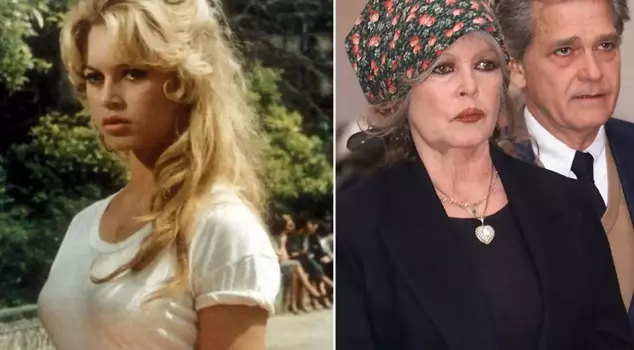
Considered one of the greatest legends of world cinema, French actress Brigitte Bardot passed away at the age of 91. Bardot had been hospitalized twice in recent months, and although there were rumors about her death, she announced that she was doing well.
Considered one of the most iconic figures in cinema history, French actress and singer Brigitte Bardot, who later left the film industry to become an animal rights advocate, passed away at the age of 91.
HOSPITALIZED TWICE IN A ROW
Brigitte Bardot was hospitalized twice in recent months, and although rumors of her death circulated, she announced that she was doing well. It was reported that Brigitte Bardot was hospitalized for a serious operation in October, and then it was said that the legendary star was back in the hospital and even had passed away.
"I HAVEN'T DIED, I'M DOING JUST FINE..."
Brigitte Bardot later made a statement saying, "I haven't died, I'm doing just fine. I have no intention of going anywhere." In her later years, she distanced herself from crowds and dedicated her life to the fight for animal rights. While staying at her home in Saint-Tropez, her condition worsened, and she was admitted to a hospital in Toulon. It was reported that Brigitte Bardot's condition was being closely monitored by doctors.
GREW UP IN A WEALTHY CATHOLIC FAMILY
Born in Paris in 1934, Brigitte Bardot grew up in a wealthy Catholic family. She earned the right to study at the Paris Conservatory due to her ballet talent. Bardot began modeling during the same period and appeared on the cover of Elle magazine at the age of 15. This caught the attention of the film industry, and she started taking small roles in the early 1950s. Bardot's life changed dramatically with the film And God Created Woman (1956), written and directed by her then-husband Roger Vadim. The character of the free-spirited young woman she portrayed in the film set in Saint-Tropez made Bardot a star not only in France but also internationally.
FROM CINEMA TO PHILOSOPHY, FROM POP CULTURE TO A SYMBOL OF THE REPUBLIC
Bardot quickly became an inspiration not only for cinema audiences but also for intellectuals and artists. In 1959, Simone de Beauvoir described Bardot as "the most liberated woman in France" in her famous article Brigitte Bardot and the Lolita Syndrome. In 1969, she was chosen as a live model for Marianne, the symbol of the French Republic.
In the 1960s, Bardot worked with directors such as Henri-Georges Clouzot, Louis Malle, and Jean-Luc Godard. She also appeared in Hollywood films, acting alongside Jeanne Moreau in Viva Maria! and Sean Connery in Shalako.
HER FAREWELL TO CINEMA
Bardot was also involved in music alongside cinema. She recorded the first version of the song Je t'aime… moi non plus, written by Serge Gainsbourg. The piece was later re-recorded with Jane Birkin and became a huge success. Bardot, increasingly disturbed by the pressures of fame, expressed her feelings in a 1996 interview with The Guardian, saying, "The madness surrounding me always felt unreal." She retired from acting in 1973.
ANIMAL RIGHTS ADVOCACY
After leaving cinema, animal rights became the center of Bardot's life. In 1977, she participated in protests against seal hunting and founded the Brigitte Bardot Foundation in 1986. She sent numerous protest letters to world leaders regarding issues such as the culling of dogs in Romania, dolphin hunts in the Faroe Islands, and cat massacres in Australia.
Her rhetoric later became increasingly harsh. In her 2003 book A Cry in the Silence, she expressed far-right views; she was convicted of "inciting racial hatred" due to her statements about immigration, religion, and minorities. For many years, she openly supported the far-right Front National in France.