03.08.2026 10:34
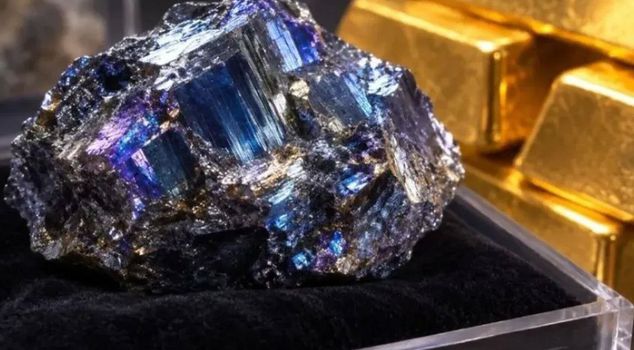
Russian scientists have identified a previously unknown type of mineral on the Kola Peninsula. The discovery, named "Kola ashcroftine," has been announced to attract attention in the scientific world due to both its unusual chemical structure and its value reaching approximately 145 dollars per millimeter.
The Russian Ministry of Science and Higher Education announced the discovery of a new mineral species at the Kirovsky mine in the Khibiny massif on the Kola Peninsula.
Researchers from the Kola Science Center of the Russian Academy of Sciences, St. Petersburg State University, and the A.E. Fersman Mineralogical Museum contributed to the identification of the mineral named "Kola ashcroftine."
CONTAINS MANY ELEMENTS IN A SINGLE STRUCTURE
Researchers noted that the mineral's most remarkable feature is that it brings together a large number of elements within a single crystal structure. For this reason, Kola ashcroftine is also described as the "chemical memory of the Earth's crust."
It was stated that the mineral, which contains different elements including yttrium, silicon, potassium, and sodium, differs from classic ashcroftine samples in terms of calcium, manganese, and fluorine content.
MORE VALUABLE THAN GOLD
In addition to its scientific significance, the economic potential of the discovery also stood out. According to experts' calculations, the value of the special coating layer formed by the mineral on the rock surface is approximately 145 dollars per millimeter. This figure is stated to be above the current value of gold.
A REGION RENOWNED FOR ITS MINERAL WEALTH
The Khibiny massif, where the discovery was made, is known as one of the geological areas hosting the greatest variety of minerals in the world. The region, which also holds large reserves of apatite and nepheline, is noted to maintain its status as an important research center for new mineral discoveries.
This discovery is expected to provide new data for scientific studies on the formation and chemical diversity of the ashcroftine mineral group.