26.07.2026 13:27
In Turkey, the crisis of 'private beaches' and 'mandatory sunbed rental' that flares up every summer has been taken up by the judiciary. Business owners who prevent citizens from accessing the sea to swim and force them to pay fees will no longer be able to do so. The Supreme Court's decision sets a precedent on this matter.
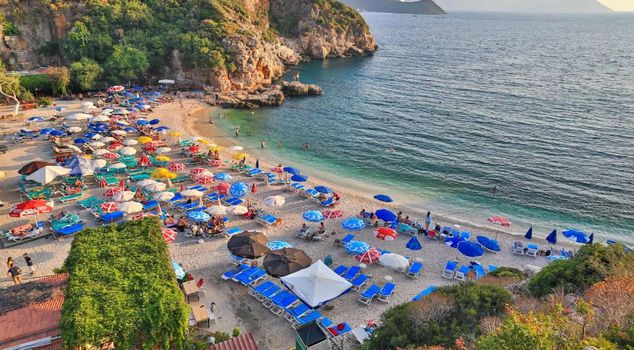
The process that extended to the Court of Cassation Criminal General Assembly began with an incident at Altınkum Beach in the Çeşme district of Izmir. A doctor, who went to the area designated as a public beach to cool off with his two children, wanted to lay his towel on the sand and enter the sea. At that time, an employee of a private business operating on the beach approached the family and asked them to leave the area.
BUSINESS OWNER AND EMPLOYEE FOUND GUILTY
After the doctor filed a complaint with the gendarmerie, the matter was taken to court. In the initiated judicial process, the local court found the employee who obstructed the coastal right and the business manager who instructed him guilty.
PRISON SENTENCE FOR THOSE BLOCKING COASTAL RIGHTS
The business employee, in the case where he was tried for his action, was sentenced to 1 year and 8 months in prison for the crime of "depriving a person of liberty"; the business official was sentenced to 1 year and 8 months in prison for the crime of "incitement to deprive a person of liberty" for directing the employee in this manner.
"CONSTITUTIONAL RIGHT"
The Court of Cassation Criminal General Assembly also approved this prison sentence given by the local court, finding it fully in accordance with the law. This decision from the judiciary was established as a binding precedent for Turkey.
In this landmark decision by the Court of Cassation, Article 43 of the Constitution and articles of the Coastal Law No. 3621 were recalled. According to the Constitution, coasts are under the sovereignty and disposal of the state and are open to the common use of the public. No legal or natural person can completely close off a public beach or prevent citizens from freely moving around and entering the sea.