26.07.2026 13:25
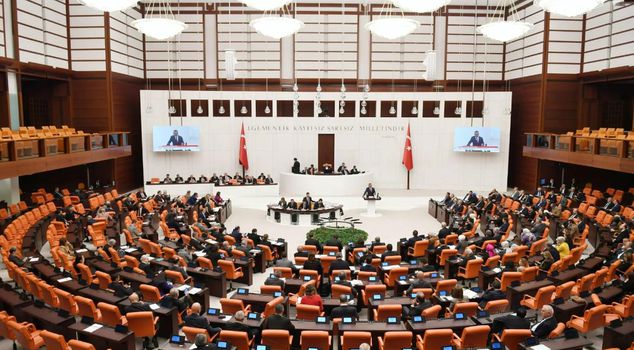
This week in the Turkish Grand National Assembly, the "framework law" proposal regarding the process is expected to be presented, and the "student amnesty" bill allowing those dismissed from universities to return to their education is expected to be debated in the General Assembly.
The work carried out within the scope of the solution process in the Turkish Grand National Assembly (TBMM) is nearing completion. It is anticipated that the group coordinators of the parties serving in the National Solidarity, Brotherhood, and Democracy Commission will come together with TBMM Speaker Numan Kurtulmuş to finalize the proposal, and the DEM Party's visits to other political parties are expected to continue. After the framework law proposal is submitted, it will be discussed in the Justice Commission and then sent to the General Assembly.
"STUDENT AMNESTY BILL WILL BE DISCUSSED"
While efforts on the framework law proposal continue, discussions will begin in the TBMM General Assembly on the Higher Education Law and the Draft Law on Amendments to Certain Laws, which includes the "student amnesty" proposal that allows those expelled from universities to return.
The proposal includes not only regulations concerning students but also ethical regulations related to academic work.
The proposal allows all students expelled from universities at the undergraduate, associate degree, undergraduate completion, and graduate levels to return to their education. Those who wish to benefit from this can apply to the universities from which they were disassociated within a period of 4 months. With the motion submitted at the commission stage, it was also made possible for students who had not previously benefited from amnesty and had been disassociated to return to their universities in the 2026-2027 academic year. Students expelled from the Police Academy, Gendarmerie and Coast Guard Academy, and military educational institutions affiliated with the National Defense University were excluded from the scope of the regulation.
STATE UNIVERSITIES WILL BE ABLE TO OPEN CAMPUSES ABROAD
Disciplinary provisions will be expanded to protect academic ethical principles and academic labor and effort. Those who use publications and theses produced by others to obtain titles/degrees will face the current penalty of dismissal from the profession, and this penalty will also include academic personnel who produce or mediate these unauthorized publications and works for others for a fee or free of charge.
State universities will be able to open campuses and establish facilities in different countries. Thus, they will serve both the students from the host country and those from Turkey who will attend through the university entrance exam.
UNIVERSITIES WILL BE ABLE TO ESTABLISH JOINT OFFICES
According to the proposal, more than one higher education institution can apply to establish a joint office. In this case, the higher education institution on whose campus or in whose partner technology development zone the office is established will be designated as the contact institution for the application. Other legal entities deemed to contribute to the office's activities can become partners by providing capital to the office. The office can use its equity or revenues to invest in the commercialization of the knowledge and inventions produced, or it can establish partnerships with public and private sector companies.
It is envisaged that faculty members working at universities in Anatolia can continue their academic careers on a contractual basis for 2 years after gaining the right to retire. Faculty members who have turned 67, are specialists according to the regulations in medicine and dentistry, and have worked at state higher education institutions, can be employed on a contractual basis if they apply to a higher education institution in need within 3 years.
Problems experienced in the practice of revolving fund additional payments for physicians receiving specialization training from the foreign national quota at universities and research and application hospitals affiliated with the Ministry of Health will be resolved.
Faculty members who receive an official invitation from Higher Education Institutions in Turkish Republics and Related Communities may be granted paid leave for a period not exceeding 3 years, with all personal rights preserved, upon the decision of the university board and the approval of the Ministry of National Education.
With the motion accepted in the commission, the provision in the Law on Revolving Fund to be Given to Health Institutions and Rehabilitation Facilities Affiliated with the Ministry of Health, regarding the determination of the revolving fund share to be transferred to scientific research projects in the use of health facilities affiliated with the Ministry of Health by medical faculties of higher education institutions, was removed from the bill.
SECURITY CLEARANCE FOR THOSE WHO WILL WORK AT UNIVERSITIES
According to the regulation made in the Security Clearance and Archive Research Law, with the motion accepted at the commission stage of the proposal, academic staff who will work at higher education institutions have also been added to the list of those subject to security clearance and archive research.